ВЛАДИМИР ВЫСОЦКИЙ (VLADIMIR VYSOTSKY)
Чужая Колея (The Wrong Track)
TRACKLIST
4.33 / 5
ABOUT THIS RECORD
THE ALBUM
Чужая Колея ("Someone Else's Rut" or "The Wrong Track") is a studio compilation album collecting original songs by Vladimir Vysotsky, issued on the Soviet state label Melodiya. Like all Vysotsky releases on Melodiya, it draws from his enormous body of work in the авторская песня (author's song) tradition — a genre built on the intimate bond between a poet-composer and his guitar, where lyrical directness and moral weight matter more than production polish. The recordings are typically spare: voice, acoustic guitar, occasionally a small ensemble backing. What the album delivers is a selection of his narrative songs — character studies, allegories, and sharp social observations — rendered with the gravelly intensity and rhythmic drive that defined his performance style. The title track, "Чужая Колея," is a compressed parable about conformity and the difficulty of breaking out of a predetermined groove in life. It is the kind of song Vysotsky wrote that read simultaneously as personal confession and collective experience, which is precisely why these recordings landed so hard with Soviet audiences.
ARTIST & RECORDING CONTEXT
Vladimir Vysotsky (1938–1980) was an actor at the Taganka Theatre in Moscow and the most widely heard unofficial voice in Soviet cultural life. He wrote and performed hundreds of songs that circulated on magnetic tape — magnitizdat — for years before Melodiya began issuing his work officially and selectively. His songs were composed and performed with minimal arrangement: his own acoustic guitar providing a rhythmic, almost percussive foundation beneath lyrics dense with slang, dark humor, and allegorical force.
The songs gathered on Чужая Колея span the range of Vysotsky's thematic territory. "Чужая Колея" itself uses the extended metaphor of a car stuck in deep ruts to talk about the psychology of conformism and the effort required to escape it. His songs frequently work this way — concrete, physical images carrying abstract moral and political weight without ever stating it plainly. Production across Melodiya's Vysotsky releases of this era was straightforward, prioritizing the voice and guitar above any studio embellishment.
THIS PRESSING
This is a Soviet Melodiya pressing, issued in the USSR. Melodiya was the sole Soviet state record label and had the exclusive right to press and distribute recordings within the country. Vysotsky's relationship with Melodiya was complicated during his lifetime — the label released only a small number of his records before his death in 1980 — but after July 1980 his catalog became a priority for the label, and multiple compilations and thematic collections were issued throughout the early-to-mid 1980s. Чужая Колея as a Melodiya release belongs to this posthumous wave: a domestic Soviet pressing made for the mass internal market, likely issued as a flexi-disc (гибкая пластинка) or standard 33 RPM LP depending on the specific configuration. Melodiya pressings of this period used the label's characteristic design conventions — house typography, state copyright notices, and ГОСТ (Soviet state standard) markings on the label.
COLLECTOR SIGNIFICANCE
Within the USSR, any Melodiya Vysotsky release of the early 1980s reached an enormous audience — demand was extraordinary and print runs, even when substantial, were absorbed quickly. Чужая Колея as a title would have carried immediate recognition: the song was among his most widely known and quoted. For Soviet listeners, obtaining an official pressing was itself meaningful, given how long his work had existed only in degraded tape copies.
For collectors today, Soviet Melodiya pressings of Vysotsky are sought for their documentary value as official state editions of work that had been semi-suppressed during the artist's lifetime. The specific interest in any given Melodiya Vysotsky title lies in identifying the pressing year, matrix, and configuration — early posthumous pressings from 1980–1982 are more desirable than later reissues. The vinyl quality of Melodiya pressings from this period varies considerably, and clean copies with undamaged labels are increasingly difficult to find given how heavily these records were played.
Spotted an error or something that needs correcting? Get in touch — I'd love to know.
YOU MIGHT ALSO LIKE

Владимир Высоцкий (Vladimir Vysotsky)
Songs of Vladimir Vysotsky
Vinyl, 7", 33 ⅓ RPM, Repress · USSR · 1982
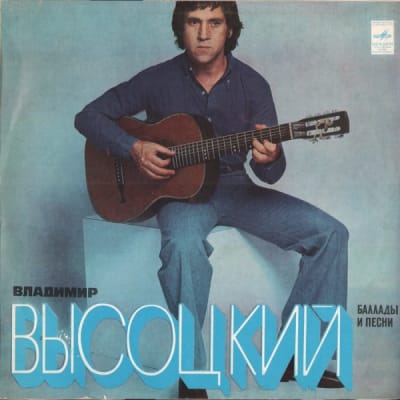
Владимир Высоцкий (Vladimir Vysotsky)
Songs
Vinyl, LP, Album · USSR · 1980

Владимир Высоцкий (Vladimir Vysotsky)
Peace To Your Home
Vinyl, LP, Album · USSR · 1988

Владимир Высоцкий (Vladimir Vysotsky)
Sentimental Boxer
Vinyl, LP, Album · USSR · 1987

Riccardo Fogli
Collezione
Vinyl, LP, Compilation · USSR · 1984
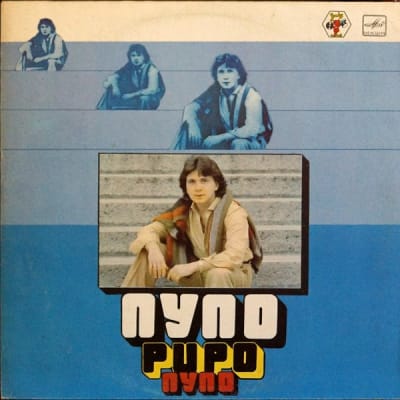
Pupo
Pupo (Пупо)
Vinyl, LP, Album · USSR · 1985

Ricchi E Poveri
Ricchi e Poveri
Vinyl, LP, Album, Reissue · USSR · 1986
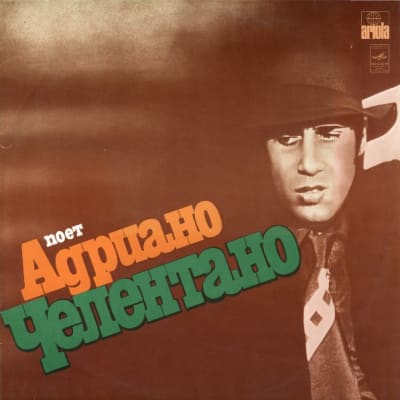
Adriano Celentano
Поет Адриано Челентано (Sings Adriano Celentano)
Vinyl, LP, Album, Repress · USSR · 1987

Mireille Mathieu
Любовь и Жизнь (Love and Life)
Vinyl, LP, Album, Repress · USSR · 1979