Collezione
TRACKLIST
4.16 / 5
SIDE A
SIDE B
ABOUT THIS RECORD
THE ALBUM FIRST
Collezione is a compilation drawing from Riccardo Fogli's run of Italian pop success in the late 1970s and early 1980s, the period during which the Florentine singer — formerly of the beat group Pooh — established himself as a solo artist in his own right. By the early 1980s Fogli had achieved substantial commercial traction across continental Europe, particularly on the strength of ballads that placed his light, controlled tenor against glossy, orchestrated production. His 1982 single "Storie di tutti i giorni" was a major hit across Italy and attracted attention well beyond it, reaching audiences in France, Spain, and — notably — behind the Iron Curtain, where Italian popular music had developed a devoted following.
ARTISTIC CONTEXT
Fogli's solo output from this era was produced with the polished infrastructure of the Italian pop industry: arranged strings, clean electric piano, and the kind of melodic construction that prioritised the vocal line above all else. "Storie di tutti i giorni" is the centrepiece any such collection orbits around — a slow-building ballad with a chorus that proved exceptionally well-suited to radio. His earlier work with Pooh gave him a songwriting sensibility that separated him from straightforward interpreters, and that craft is audible in how his solo material is structured rather than merely performed.
THIS PRESSING
This edition was manufactured and released by Melodiya, the Soviet state label, in 1984 under licence. Melodiya issued a selective but genuine strand of Western popular music throughout the 1980s — Italian artists were disproportionately well represented, partly due to cultural exchange agreements and partly due to the established appetite for Italian pop among Soviet listeners. The catalogue infrastructure of these releases was handled centrally, with Melodiya pressing plant codes and matrix information varying by facility.
COLLECTOR SIGNIFICANCE
Soviet Melodiya pressings of Western artists carry a distinct appeal: they are geographically contained editions produced in limited quantities for a closed market, with no commercial export mechanism at the time of manufacture. Fogli's popularity in the USSR was genuine and documented — his records circulated widely in the Soviet domestic market — making this a pressing that connects directly to that reception history rather than being an incidental licence. The artwork on Melodiya editions of Western artists frequently diverged from the original European sleeves, and that visual difference alone makes this pressing a distinct object. Copies that surfaced in the West did so largely through private hands after 1991.
Spotted an error or something that needs correcting? Get in touch — I'd love to know.
YOU MIGHT ALSO LIKE
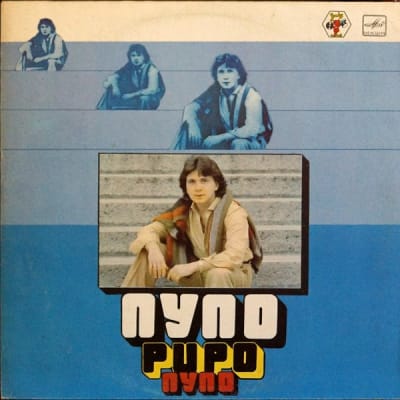
Pupo
Pupo (Пупо)
Vinyl, LP, Album · USSR · 1985

Ricchi E Poveri
Ricchi e Poveri
Vinyl, LP, Album, Reissue · USSR · 1986
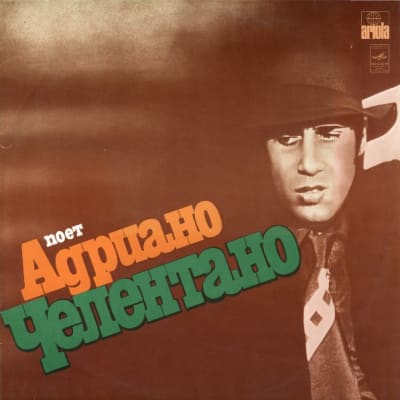
Adriano Celentano
Поет Адриано Челентано (Sings Adriano Celentano)
Vinyl, LP, Album, Repress · USSR · 1987

Adriano Celentano
Soli
Vinyl, LP, Album · USSR · 1988

Joe Dassin
Люксембургский Сад (Le Jardin du Luxembourg)
Vinyl, LP, Album · USSR · 1979