Why Soviet Collectors Loved ABBA
Picture a Moscow apartment, late 1970s. A family gathered around a record player — the kind of bulky, lacquered Soviet unit that sat in the living room like a piece of furniture. On the turntable, a pale blue Melodiya pressing, slightly thicker than a Western record, its label printed in Cyrillic. From the speakers comes the opening piano cascade of "Dancing Queen." A mother taps her foot. A teenage daughter closes her eyes. A father, who spent his working day surrounded by the vocabulary of Soviet official life — production quotas, five-year plans, Party slogans — says nothing, but doesn't leave the room. This is not a trivial moment. In a country where Western culture arrived in fragments, carefully filtered and sometimes forbidden, the simple act of listening to ABBA was freighted with meaning that most Western teenagers in 1977 could scarcely have imagined.
The Iron Curtain Had Cracks — And Music Poured Through Them
The Soviet Union of the 1970s and early 1980s was not a hermetically sealed cultural universe, though it sometimes suited both Cold War sides to pretend otherwise. What it was, more precisely, was a carefully managed one — a culture in which access to Western popular music existed on a spectrum running from barely-tolerated to actively suppressed, depending on who was listening, what they were listening to, and what the political weather was doing that week.
Rock music occupied the dangerous end of that spectrum. The Beatles had been a persistent headache for Soviet cultural authorities since the 1960s. Their music circulated on bootleg recordings pressed onto used X-ray film — a phenomenon Soviet listeners called "ribs" or "bones," for obvious reasons. The Rolling Stones were considered politically suspect. Punk, when it arrived, was practically classified as ideological warfare. The message Western rock sent — of rebellion, individualism, sexual freedom, anti-authoritarianism — was precisely what the Soviet state spent enormous energy trying to suppress.
ABBA was something different. When Soviet cultural gatekeepers looked at this Swedish group, they saw pop music, not counterculture. They heard melody, not menace. ABBA's music had no political content, no protest energy, no obvious anti-establishment charge. Its themes were romantic, occasionally melancholy, but fundamentally celebratory. This made ABBA navigable in a system that otherwise treated Western popular culture as a Trojan horse. It didn't hurt that Sweden was a neutral country — not a NATO member, not an ideological adversary in the way the United States or Britain were framed. ABBA arrived from a geopolitically unthreatening corner of the West, singing songs that made people happy.
How the Music Actually Reached Soviet Listeners
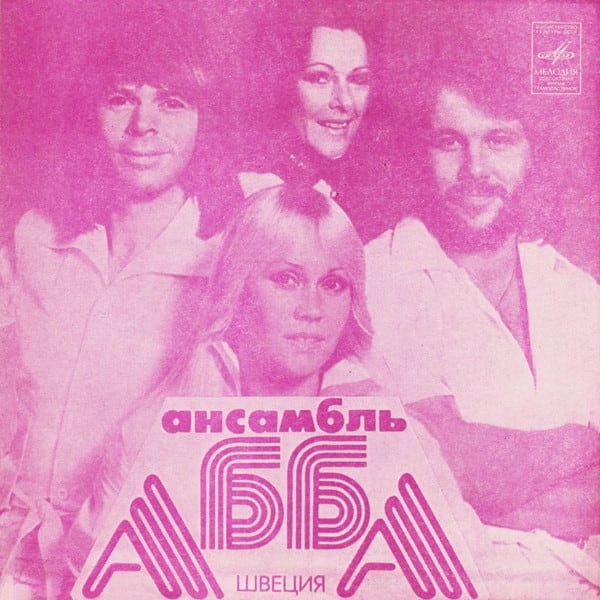
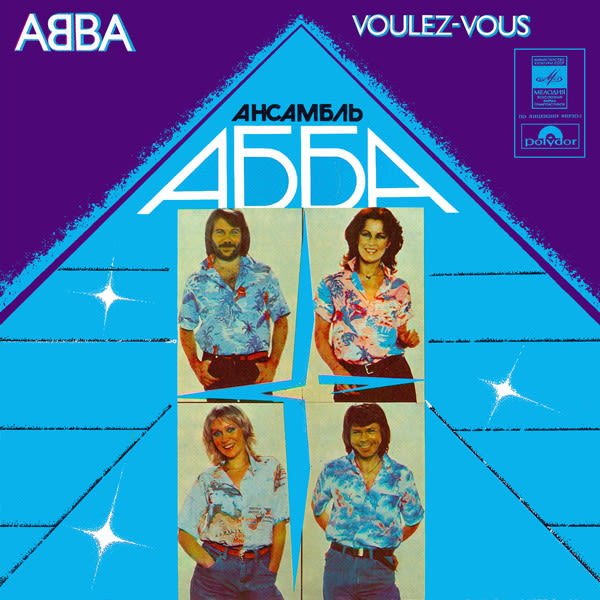
Melodiya, the state record label that held a monopoly on recorded music in the Soviet Union, did release licensed ABBA material — and this is where Soviet collectors have a genuinely fascinating story to tell. Melodiya's ABBA pressings are prized objects today precisely because they document the strange, filtered way in which Western pop culture was officially absorbed into Soviet life. These were not bootlegs. They were official, state-sanctioned products, which makes them both more and less strange depending on how you look at it.
The Melodiya releases were not comprehensive. Soviet listeners didn't get everything. What they got were selections — curated, in the loosest sense, by whatever combination of commercial instinct and bureaucratic caution governed Melodiya's licensing decisions at any given moment. Songs like "Dancing Queen," "Mamma Mia," and "Fernando" made it through. "Waterloo," despite being ABBA's breakthrough at Eurovision in 1974, had a more complicated journey — Eurovision itself had a peculiar relationship with Soviet broadcasting, since the USSR was not a participating country, but the contest's results filtered through nonetheless via radio and other channels.
Beyond the official releases, the real circulation of ABBA in the Soviet Union happened through cassettes — and the cassette economy of the Soviet Union was a vast, largely invisible infrastructure of cultural exchange. Someone might acquire an official Melodiya pressing, or a smuggled Western record brought back by a sailor or a diplomat's driver, or occasionally an actual Western release obtained through the foreign currency Beryozka stores that were technically off-limits to ordinary Soviet citizens. From that source recording, copies multiplied. A single cassette passed through a network of friends could reach dozens of households. The fidelity degraded with each generation of copying, but the music survived. Soviet listeners were famously tolerant of tape hiss and dropout — they had to be.
Television was the other vector. Soviet state television occasionally broadcast foreign musical content, and ABBA's appearances — whether clips acquired through cultural exchange agreements or footage screened on specific programs — became events. Families who owned television sets would sometimes hear from neighbors: there's something Western on tonight. People watched with the concentrated attention of those who understood they were seeing something rare.
What Made ABBA Different From Everything Else
The most important question is not how ABBA arrived in Soviet living rooms, but why they stayed there — why they became beloved rather than merely curious. And the answer, when you think about it carefully, has less to do with ABBA's politics than with their sound.
ABBA wrote melodies. Genuinely extraordinary, almost mercilessly memorable melodies. In a country with a deep classical music tradition, where melodic invention was valued and understood, this mattered enormously. Soviet listeners were not unsophisticated — they had grown up with classical music on the radio, with folk song traditions, with a culture that took music seriously. What struck many Soviet listeners about ABBA was not that the music was exotic, but that it was recognizably, almost classically constructed. The harmonies were rich. The arrangements were dense and orchestral in their logic. "Fernando" had the sweep of a film score. "Dancing Queen" was structured with the kind of formal intelligence that serious music lovers could appreciate even if they couldn't name what they were responding to.
Then there was the sheer visual glamour of ABBA, transmitted in fragments through television clips and the occasional photograph in a foreign magazine. The costumes — those extraordinary, sequined, platform-booted confections — arrived in Soviet consciousness as images from another dimension of human possibility. This was not the gritty, denim-clad world of Western rock, which could seem threatening or alien. ABBA's world was colorful, theatrical, joyful, abundant. It looked like a fantasy of modern life that was simultaneously recognizable and impossibly distant. For Soviet audiences navigating the chronic drabness of late Brezhnev-era consumer culture, this mattered. ABBA didn't look threatening. They looked wonderful.
This is the central paradox, and it's worth sitting with for a moment. ABBA offered Soviet listeners a version of the West that was glamorous, optimistic, and modern, but not ideologically confrontational. They didn't sneer at authority. They didn't sing about drugs or revolution. They sang about love, loss, longing, dancing, happiness. These were emotions that required no translation and no political alignment. A Soviet grandmother and her teenage granddaughter could sit in the same room and both find something in "Dancing Queen." That kind of intergenerational accessibility was almost unique among Western acts in the Soviet market.
For Collectors: What to Know Before You Start Looking
If you're approaching Soviet-era ABBA releases as a collector, the first thing to understand is that Melodiya pressings are genuinely collectible objects, not simply budget alternatives to Western pressings. They were manufactured under different quality standards — the vinyl formulation varied, pressing quality was inconsistent, and the paper sleeves were often minimal — but these are features, not bugs, for collectors interested in this specific history.
The Melodiya ABBA releases most commonly encountered include various compilation and EP formats rather than straightforward full album releases in the Western sense. Melodiya's licensing arrangements with Western labels during this period were complex, and the formats Soviet listeners received often differed significantly from what was available in Sweden or the UK. Tracking down original Melodiya pressings at record fairs in Russia, the Baltic states, Poland, or Ukraine — where Soviet-era vinyl still surfaces regularly — is a different experience from hunting at a London record fair, but the material is out there. Condition varies enormously. Many copies circulated heavily and show it.
Beyond official Melodiya releases, collectors with a serious interest in this area sometimes seek out Polish or East German pressings of ABBA material — both Polskie Nagrania and VEB Deutsche Schallplatten Amiga released licensed Western pop content, and their quality control was, in many collectors' experience, somewhat more consistent than Melodiya's. Amiga releases in particular are increasingly sought after, with ABBA-adjacent content appearing on various compilations. For anyone building a collection around the specific history of Western pop in the Eastern Bloc, these pressings are essential documents — not just records, but physical evidence of the strange, determined way music crossed a border that was supposed to be uncrossable.
Decades after the Soviet Union dissolved, ABBA remains one of the most emotionally loaded musical references across Russia, Ukraine, the Baltic states, and the broader post-Soviet world. People who were children or teenagers in the late 1970s and 1980s carry this music with them not simply as pop nostalgia but as memory of a specific kind of longing — the longing for a world beyond the one they could reach. The cassette copies with their degraded sound, the Melodiya pressings played until the grooves softened, the moments of a television clip glimpsed through a doorway: these are the textures of a cultural experience that has no real Western equivalent.
Four musicians from Stockholm, writing songs about love and dancing and the occasional Napoleonic battle, had no particular plan to become emblems of impossible aspiration for a hundred million people on the other side of a geopolitical dividing line. But music has always been indifferent to the plans of states. It finds the cracks, degrades gracefully through generations of copying, and arrives — still recognizable, still alive — in rooms where it was never officially supposed to be.