The Foreign Artists Who Became Soviet Superstars
There is a particular kind of nostalgia that lives in the post-Soviet world — one that doesn't belong neatly to any single country or generation, but cuts across borders that no longer exist on maps. Ask someone in their fifties or sixties in Moscow, Kyiv, Riga, or Tbilisi what the soundtrack of their childhood sounded like, and a pattern emerges that surprises most Western listeners. Alongside homegrown Soviet pop and the occasional Russian folk melody, you'll hear Italian names, Swedish harmonies, West German disco, and a Czechoslovak tenor whose voice seemed to belong to another universe entirely. These weren't fringe tastes. They were mainstream, beloved, embedded into the furniture of everyday Soviet life. And that didn't happen by accident.
The Gatekeeper: How the Soviet State Shaped What People Heard
The Soviet music industry was not a market. It was a system. At its center sat Melodiya, the single state-run record label that held a monopoly on the production and distribution of recordings across the USSR from 1964 onward. Every record pressed in the Soviet Union passed through Melodiya's hands — which meant it also passed through the ideological filters of the Ministry of Culture and, at various points, through committees whose job was to determine what was culturally appropriate for Soviet citizens to hear. This was not a hidden process. It was the openly stated function of the state apparatus.
What the system produced, paradoxically, was not complete cultural isolation but a highly curated form of openness. Foreign music was not banned outright — that would have been neither practical nor, frankly, desirable to Soviet authorities who understood the propaganda value of appearing cosmopolitan and culturally engaged. The question was never simply "Western or not Western?" The question was "does this reinforce or threaten the social order?" And that question, applied to pop music, produced some genuinely surprising answers. It meant that certain foreign artists not only got through the gate — they were actively promoted, pressed onto millions of Melodiya records, and broadcast on state television to audiences of hundreds of millions.
The system also shaped exposure through performance. The Intervision Song Contest, launched in 1977 as a socialist-world counterpart to Eurovision, gave Soviet audiences their first regular televised glimpse of international pop music presented in an approved, festival format. State-organized concert tours brought select foreign artists to Soviet stages — massive venues, enormous crowds, the kind of reception that artists from small European countries had never imagined. Television programs like Pesnya Goda (Song of the Year) occasionally featured foreign guests. Each appearance was a careful, deliberate choice. And the artists chosen for these moments of exposure often rode them to a level of fame in the USSR that they had never achieved anywhere else.
The Chosen Ones: Melody, Warmth, and the Politics of the Inoffensive
So why Adriano Celentano and not, say, the Rolling Stones? Why ABBA rather than Led Zeppelin? The answer sits at an interesting intersection of ideology and aesthetics, and once you see it, it's hard to unsee.
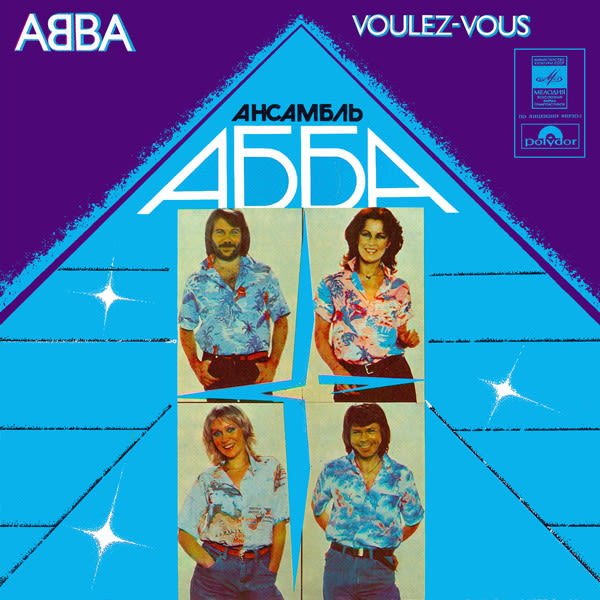
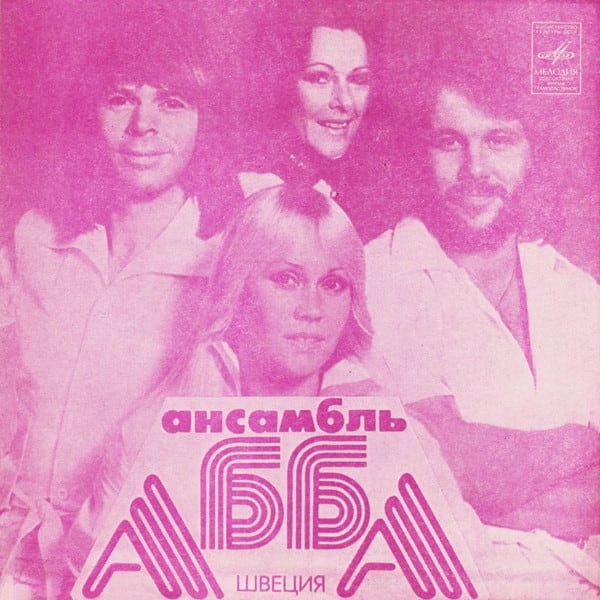
The artists who broke through in the Soviet Union shared a cluster of characteristics that were, at first glance, purely musical: strong melodies, accessible arrangements, emotional directness, and voices that carried feeling across language barriers. Celentano's mugging charm and elastic baritone, Toto Cutugno's earnest romanticism, the bright harmonic warmth of Ricchi e Poveri's close-harmonized pop — these were artists who communicated something that didn't require translation. ABBA's productions were so immaculately constructed, so emotionally legible in their rises and falls, that Soviet listeners who understood not a word of English could feel exactly what "Fernando" or "The Winner Takes It All" was about. Boney M., arriving in 1978 with Rivers of Babylon, brought a kind of euphoric, almost devotional energy that somehow landed as celebratory rather than subversive.
But the other thing these artists shared — and this is the part that matters — is that none of them were troublemakers. Celentano was a conservative Catholic. Cutugno was a sentimental balladeer who wrote songs about Italy and loving your wife. Karel Gott, the Czech baritone who became arguably the most beloved foreign artist in Soviet history, had actively cooperated with the Czechoslovak communist authorities and signed the anti-Charter 77 declaration; he was as unthreatening to the establishment as it was possible for an internationally recognized artist to be. Dean Reed, the American-born singer who settled in East Germany and became a kind of approved, socialist-friendly version of a Western pop star, was practically a state-endorsed figure — singing in Russian, making Soviet-friendly films, and presenting himself as living proof that a Westerner could choose the socialist world. The Soviet system didn't just tolerate these artists. It recognized them as useful.
This is the paradox that collectors and historians often overlook when they romanticize the idea of Western pop "penetrating" the Iron Curtain. Much of what got through wasn't smuggled in on contraband tapes or passed between hands in underground networks — though that happened too, with genuinely subversive artists. Much of it was handed to Soviet audiences, deliberately and officially, because it was exactly the kind of music the authorities were comfortable with. Melodiya pressed ABBA records. Boney M. played Moscow in 1978 at the personal invitation of the Soviet authorities. Toto Cutugno would eventually win the 1990 Intervision contest and become a figure of near-mythological status in Russia. The gate was opened from the inside.
Why It Hit So Hard: Scarcity, Imagination, and the Emotional Weight of the Foreign
Understanding why these artists became superstars — not just popular, but genuinely enormous — requires understanding what it felt like to encounter them in that context. The Soviet Union was not a place of endless choice. Consumer culture, in the Western sense, simply didn't exist in the same way. A Melodiya record of Adriano Celentano wasn't one album among hundreds you could browse in a shop. It might be the only new foreign music a family owned for years. That scarcity transformed the listening experience into something more intense, more significant, more emotionally loaded than anything a Western teenager rifling through a record store could have felt.
Soviet audiences also brought something to these recordings that the artists themselves couldn't have anticipated: a kind of projective imagination. Because lyrics were often incomprehensible — Italian, Swedish, English — listeners filled them with their own meanings. Karel Gott's Czech was close enough to Russian that his songs felt almost accessible, almost native, which may partly explain his extraordinary resonance. But even completely foreign-language recordings carried a charge that was partly about the music and partly about what the music represented: a world beyond the borders, a glimpse of something that existed elsewhere, a reminder that human feeling was not geographically contained by ideology.
Television amplified everything. A Soviet family gathered around their television set in the late 1970s watching Boney M. perform on a state broadcast wasn't just watching a pop group. They were watching something that had been ratified as real, as legitimate, as part of the world they lived in. That official endorsement paradoxically intensified the emotional connection rather than diminishing it. These weren't forbidden fruits. They were gifts from the gatekeepers — and somehow that made them feel even more precious.
For Collectors: Pressing the Iron Curtain
For record collectors, this history has left a remarkably tangible archive. Melodiya produced its own pressings of many of these artists, and these Soviet-era releases occupy a genuinely distinctive corner of the collecting world. Melodiya pressings of ABBA — particularly Arrival and The Album — are among the most sought-after, partly for their historical significance and partly because the quality of Soviet vinyl pressing varied considerably, making clean copies genuinely hard to find. Boney M.'s Soviet-era pressings exist in several variants and turn up at Eastern European record fairs with some regularity, though condition is always the issue.
Karel Gott's Melodiya catalogue is extensive and relatively accessible, with dozens of releases across multiple decades. These are not rare records in the sense of scarcity — they were pressed in large numbers — but finding them in excellent condition outside the former Soviet republics takes patience. The same applies to Toto Cutugno and Ricchi e Poveri, whose Melodiya editions are prized by collectors who specialize in the Italian pop-Melodiya crossover, a genuinely specific niche that has developed its own dedicated following.
Dean Reed's East German Amiga releases are a separate but related collecting territory. His albums on the East Berlin-based Amiga label are well-documented and increasingly collected as Cold War cultural artifacts in their own right. Picture sleeves and promo editions command premiums. Beyond the vinyl itself, the broader collecting ecosystem around this phenomenon — festival programs, concert posters, Soviet-era music magazines featuring these artists — tells a story that the records alone can only partially convey.
What makes all of this material worth collecting isn't just rarity or sound quality. It's the historical weight behind it: the knowledge that these objects were the physical carriers of something remarkable — a musical conversation conducted across one of the most heavily fortified cultural boundaries in human history. The music got through. The records exist. And decades after the wall came down, they're still playing.