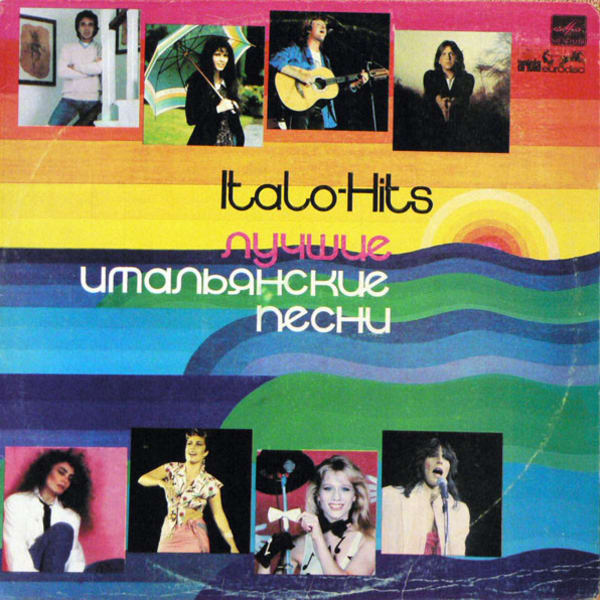
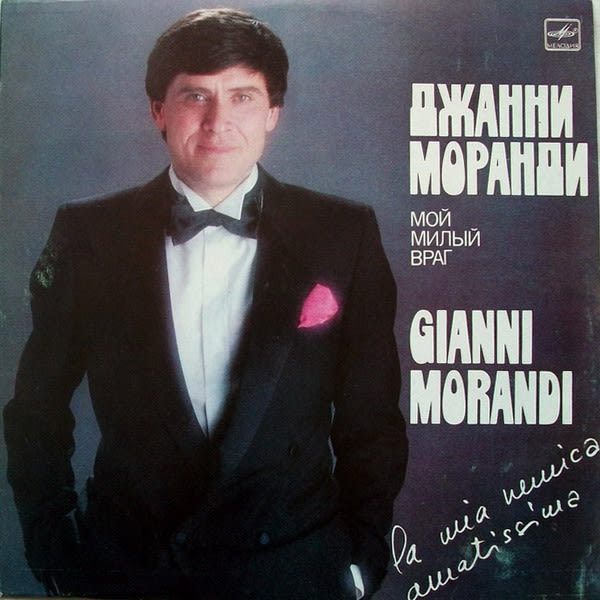
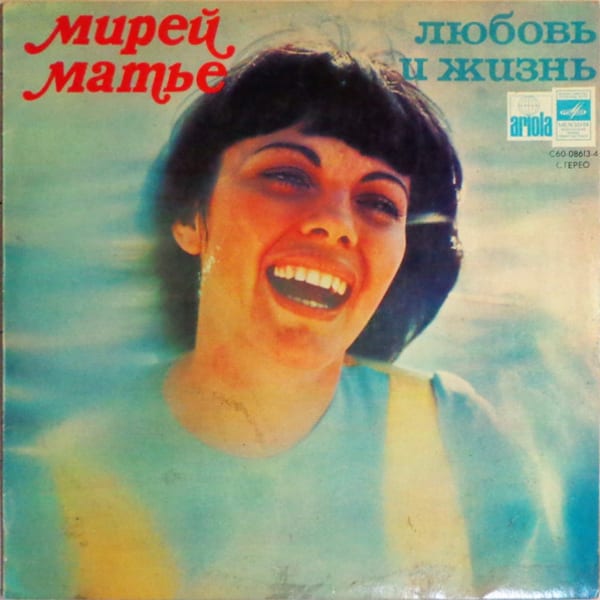
There is a record plant roughly 35 miles southwest of Moscow, in a small town called Aprelevka, that once pressed millions of records a year for a population that had no other option. No competing label. No import shop. No way to browse a foreign catalog. If you lived in the Soviet Union and you wanted to buy a record — any record — it came from one place: Melodiya.
For roughly three decades, this single state-owned label was the gatekeeper of music for nearly 300 million people. That is a level of cultural power that no Western record label has ever come close to matching, and it makes Melodiya one of the most fascinating — and most misunderstood — institutions in the history of recorded music.
Before the Groove: Soviet Recording History
To understand why Melodiya matters, you have to understand what came before it. The Soviet recording industry had a chaotic, patchwork history that stretched back to the early days of the USSR. In the 1920s and 1930s, several Soviet factories produced shellac 78s under various administrative umbrellas, but there was no unified system. Recordings were made, sometimes duplicated, often poorly distributed, and the whole enterprise felt like an afterthought to a government more interested in heavy industry than in pop music. By the 1950s, the Soviet state was pressing vinyl records under labels like Muztrest and later through factories that operated semi-independently — but coordination was poor, quality was inconsistent, and the catalog was scattershot.
The more famous footnote to this era is the roentgenizdat — or "bone music" — phenomenon. Because blank vinyl was scarce and official releases were tightly controlled, black-market music lovers began pressing bootleg recordings onto discarded X-ray film. Jazz standards, rock and roll, forbidden tangos — all of it bootlegged onto the ribcages and skulls of anonymous patients, sold in parks and alleyways. This wasn't just a quirky historical detail; it tells you everything about the demand that existed for music the state either hadn't released or actively prohibited. That demand was real, it was enormous, and the Soviet government eventually understood it had to be managed.
By the early 1960s, Soviet cultural authorities had concluded that a centralized, controlled music industry was both politically necessary and economically sensible. You couldn't stop people from wanting music. But you could decide what music they got.
Did You Know? The roentgenizdat bootlegs — records pressed onto discarded X-ray film — were known colloquially as rebra, meaning "ribs." Sellers would sometimes advertise them as "jazz on bones." A small museum in St. Petersburg has preserved examples of these extraordinary artifacts.
The Birth of a Soviet Music Giant
Melodiya — officially Vsesoyuznaya Firma Gramplastinok Melodiya, or the All-Union Gramophone Record Firm Melodiya — was established in 1964. The timing was deliberate. Khrushchev's cultural "Thaw" had already loosened some restrictions on artistic expression, and the Soviet government recognized that a unified, state-controlled label was a far more efficient tool for shaping musical culture than a messy collection of semi-independent pressing plants. Melodiya absorbed existing recording infrastructure and became the sole legal producer and distributor of gramophone records across the entire USSR.
What made Melodiya structurally unique was its vertical integration. It didn't just release records — it owned the studios where recordings were made, the factories where records were pressed, and the distribution network that got them into shops across eleven time zones. From the musician in the recording session to the customer at the counter of a state record store in Tashkent or Vladivostok, every link in the chain was Melodiya. This wasn't a label in the Western sense; it was a ministry with a catalog.
The label's headquarters were in Moscow, but its reach extended through regional offices and pressing plants across the Soviet republics. Different republics had their own musical traditions, and Melodiya — perhaps surprisingly — did make genuine efforts to document and release regional folk music, classical works by local composers, and performances in minority languages. The catalog eventually grew to encompass tens of thousands of releases, spanning everything from Azerbaijani mugham to Siberian throat singing.
Collector's Note: Early Melodiya releases from the mid-to-late 1960s used a distinctive two-tone blue and white label design. Later pressings shifted through several label variations — dark red, flexi-disc gray, and eventually the more familiar red-and-white design common in the 1970s and 1980s. Label variations are a key dating tool, and early pressings are generally the most sought-after.
More Than Just a Record Label
Melodiya occupied a role in Soviet daily life that is genuinely hard to map onto any Western equivalent. Music was not a lifestyle accessory in the USSR — it was one of the very few forms of personal entertainment that was widely available, relatively affordable, and socially acceptable. Soviet citizens bought records the way Westerners might buy books: seriously, thoughtfully, and often with real sacrifice. A new Melodiya LP typically cost around two or three rubles in the 1970s — not nothing in a Soviet context, but accessible enough that millions of ordinary families built substantial collections.
The label also functioned as a cultural preservation engine, and this is where its legacy gets genuinely complicated. On one hand, Melodiya gave Soviet audiences extraordinary access to classical music. The label's classical catalog was vast and often excellent: complete symphony cycles, opera recordings, chamber music, piano and violin concertos featuring some of the greatest performers of the twentieth century. David Oistrakh, Sviatoslav Richter, Mstislav Rostropovich, Emil Gilels — recordings by these artists on Melodiya are not curiosities or historical documents. They are definitive performances that Western classical labels actively licensed and reissued. In some cases, the Melodiya recording remains the finest available version.
On the other hand, every recording released by Melodiya had to pass through layers of state approval. Composers and performers existed within a system of official recognition — membership in the Union of Soviet Composers, for instance, was not optional if you wanted your work recorded and distributed. Music that was too experimental, too political, or simply too Western in sound could be rejected, shelved, or released in deliberately small quantities. Melodiya's catalog reflects not just what Soviet musicians created, but what the state decided the public should hear.
Did You Know? Melodiya licensed recordings to Western labels including HMV, Angel Records, and Columbia Masterworks. Some of the Melodiya-sourced classical recordings released in the West in the 1970s are now highly collectible in their own right — particularly UK HMV pressings of Oistrakh and Richter recordings.
The Music of an Empire
It would be a mistake to think of Melodiya purely as a vehicle for classical music and state-approved folk ensembles. By the 1970s, the label had developed a surprisingly broad popular music catalog. Soviet pop — known as estrada — was a genre unto itself: melodic, often lush, frequently sentimental, and deeply loved by millions of listeners who had no access to anything else. Artists like Muslim Magomayev, Sofia Rotaru, and Alla Pugacheva became genuine superstars, their records selling in quantities that would impress any Western major label.
Jazz had a particularly interesting history at Melodiya. Officially, jazz had been viewed with suspicion — even hostility — for much of the Stalin era, associated as it was with American culture and Black American music. But by the 1960s and 1970s, Soviet jazz had developed into a sophisticated and distinctive tradition. Melodiya released recordings by musicians like Georgy Garanian and the Leningrad Dixieland Band, and later more adventurous figures like the pianist Vyacheslav Ganelin. These records are now genuinely hard to find in good condition and are increasingly sought after by jazz collectors internationally.
Rock music presented Melodiya with its most persistent headache. Soviet rock — which emerged in the late 1960s and developed through the 1970s and 1980s — was partly tolerated, partly suppressed, and almost always complicated. Bands like Mashina Vremeni and later Kino circulated largely through magnitizdat — home tape recordings passed hand to hand — before Melodiya eventually released official versions of some of their work in the late 1980s, when Gorbachev's glasnost reforms opened the door wider. By then, the underground had already made these artists legends. The official Melodiya releases were, in some ways, the last word on music that had already been heard by millions through entirely unofficial channels.
Western Music Behind the Iron Curtain
Here is where Melodiya's story becomes genuinely surprising to anyone who assumes the Iron Curtain was a perfect seal against Western pop culture. It wasn't. And Melodiya was one of the main reasons why.
From the early 1970s onward, Melodiya negotiated licensing deals with Western labels and released official Soviet pressings of foreign artists — carefully selected, heavily filtered, but real nonetheless. ABBA was licensed by Melodiya, and their records sold astonishingly well. Boney M., the West German Eurodisco group fronted by Bobby Farrell, became so popular in the Soviet Union that their 1978 album Nightflight to Venus reportedly sold millions of copies in Soviet pressings. Adriano Celentano and Ricchi e Poveri from Italy had devoted Soviet followings that would have surprised their own home markets.
The selection of which Western artists were approved was not random, and it was not entirely ideological in the crude sense. Artists from countries with which the USSR had warmer political relationships — Italy, France — often had better chances. Music that was seen as anti-establishment in the West could sometimes get a pass, because the Soviet authorities preferred to frame Western pop as the decadent product of a corrupt capitalist system rather than something their own citizens desperately wanted. ABBA was unthreatening enough. The Beatles, for the longest time, were not.
Did You Know? The Beatles were never officially released by Melodiya during the Soviet era, despite being wildly popular through bootleg tapes and roentgenizdat pressings. An official Soviet Beatles album remained a kind of holy grail for Soviet rock fans well into the 1980s. Melodiya finally released a Beatles compilation in 1986 — a moment that felt genuinely historic to Soviet listeners.
Collector's Note: Soviet pressings of Western artists on Melodiya are consistently among the most sought-after items for collectors of this material. ABBA, Boney M., and Italian artists particularly command serious interest. Condition is everything — many copies circulated heavily — and original inner sleeves add significantly to value.
The Factories That Pressed Millions of Records
Any serious discussion of Melodiya has to include the pressing plants, because they are where the label's physical legacy actually lives. The most famous is the Aprelevka plant, officially known as the Aprelevka Record Factory, located in the town of the same name in the Moscow region. Founded long before Melodiya itself — it dates back to the early Soviet period — Aprelevka became the flagship facility, responsible for a huge proportion of Melodiya's total output. Collectors who handle Melodiya records regularly learn to recognize the "A" matrix codes that identify Aprelevka pressings.
Other major facilities included the Leningrad plant, the Tashkent plant, and facilities in Riga and Tbilisi, among others. Regional plants often pressed the same titles as Aprelevka but with different matrix codes and sometimes slightly different label variations. This creates a minor obsession among dedicated Melodiya collectors: the same album can exist in half a dozen pressing variants from different factories, and the sonic differences between them are real and debated with genuine passion in collector communities. Aprelevka pressings are generally considered the standard; some collectors prefer Leningrad pressings for certain titles.
The vinyl quality itself deserves mention. Soviet vinyl had a reputation — not always fair — for being inferior to Western pressings. The reality is more nuanced. Early Melodiya pressings, particularly in the 1960s and into the 1970s, can be excellent — quiet surfaces, strong groove depth, good channel separation. Later pressings, particularly from the early 1980s, reflect shortages in materials and can be genuinely noisy. Knowing your Melodiya pressing eras matters more than it might with a Western label.
The End of an Era and What Came After
The collapse of the Soviet Union in 1991 hit Melodiya like a truck. Almost overnight, the conditions that had made its monopoly possible — state control of the economy, restricted import markets, no legal alternative distribution — simply ceased to exist. Western labels flooded in. CDs arrived. The record stores that had sold Melodiya product were privatized, repurposed, or closed. Melodiya survived, technically, but its transformation was painful and its identity uncertain.
The label changed ownership and structure several times through the 1990s and 2000s. It eventually repositioned itself primarily as a classical music archive label — licensing its back catalog of Soviet-era recordings to Western partners, reissuing material on CD, and gradually digitizing its archive. The back catalog is genuinely enormous, and its value as a historical document of Soviet musical life cannot be overstated. Melodiya recordings of Richter, Oistrakh, and Rostropovich alone justify the label's continued existence as a catalog operation.
The physical record production that was Melodiya's core identity for three decades is essentially gone. The Aprelevka factory, after struggling through the 1990s, eventually ceased large-scale production. Some of its infrastructure was repurposed; the building itself has undergone changes that collectors who visit find quietly melancholy. What was once one of the busiest record-pressing facilities in the world is now a significantly quieter place. The millions of records it pressed are out there, though — in flea markets in Moscow and St. Petersburg, in collections across Europe, and increasingly on the shelves of Western collectors who discovered Melodiya through its classical recordings and stayed for everything else.
Why Collectors Still Care — And What to Look For
The collector appeal of Melodiya breaks down into several distinct categories, and it's worth being specific about them rather than vague. For classical music collectors, Melodiya is straightforwardly essential. The label's recordings of Soviet-era performers represent some of the greatest playing ever committed to vinyl, and original pressings — particularly from the 1960s and 1970s — can sound extraordinary on a decent turntable. Richter's recordings of Schubert, Beethoven, and Prokofiev. Oistrakh's concerto recordings. The Borodin Quartet's Shostakovich cycle. These are not historical curiosities; they are actively sought by people who listen to classical music seriously.
For pop and rock collectors, the appeal is different: it's partly historical, partly sonic, and partly the thrill of holding an artifact that feels genuinely unlikely. A Melodiya pressing of ABBA's Abba or Boney M.'s Nightflight to Venus is a strange and wonderful object — familiar music in an entirely unfamiliar context, with Cyrillic text on the sleeve and a label that carries the weight of an entire political system. The 1986 Beatles compilation is the obvious grail for many, but serious diggers find Melodiya pressings of Italian and French artists that are almost unknown outside of specialist circles.
Jazz collectors have perhaps the most underexplored territory. Soviet jazz on Melodiya — particularly recordings from the late 1960s through the 1980s — is largely unknown to international collectors and priced accordingly. This is a gap that will not last. The recordings are real, the musicianship is often exceptional, and the supply is finite.
Conclusion
Melodiya is not an easy institution to summarize, and perhaps that is precisely what makes it worth studying. It was a tool of state control and a genuine archive of human creativity. It suppressed music and preserved music, often simultaneously. It gave Soviet listeners access to Sviatoslav Richter and withheld The Beatles. It pressed millions of records for a captive audience and, in doing so, left behind one of the most extraordinary catalogs in the history of recorded sound.
What the label represents, more than anything else, is a reminder that music does not exist outside of the systems that produce and distribute it. In the West, those systems are commercial. In the Soviet Union, they were political. The results were different in obvious ways — and surprisingly similar in others. People wanted music badly enough to press it onto X-ray film. They bought records at real sacrifice. They passed tapes hand to hand in the dark. The machinery that Melodiya represented was designed to manage that hunger, not satisfy it. And yet, despite everything, it produced things of lasting.