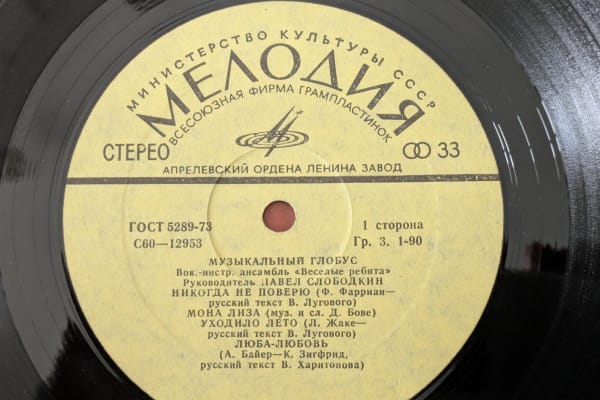
You've just pulled a black-label disc out of a crate at a flea market. The sleeve is plain, sometimes barely there. The text is in Cyrillic. The label reads Мелодия — Melodiya. You have no idea if this is a first pressing of something extraordinary or the Soviet equivalent of a budget compilation nobody wanted. The good news: you're holding one of the most interesting, most misunderstood, and most undervalued categories in all of vinyl collecting. Here's how to figure out what you've got — and why it matters.
Why Melodiya Deserves a Place in Your Collection
Melodiya was the sole official record label of the Soviet Union, which means every commercially released record pressed in the USSR came through this single channel. That monopoly gives the catalog a strange kind of coherence — and some fascinating quirks. For a full account of the label's history, check out our dedicated Melodiya history article elsewhere on the site. What matters for collectors right now is this: because Melodiya operated outside the Western music industry, its records followed different rules, different aesthetics, and a completely different logic of value.
Western collectors have historically ignored Melodiya because they can't read the sleeves, don't recognize the artists, and assume Soviet records must be inferior. That assumption is wrong on multiple counts — and it's exactly what keeps prices low enough to make this one of the last genuinely affordable collecting niches left. Records that would cost serious money if they carried a Deutsche Grammophon or Blue Note label often show up in Melodiya pressings for a few dollars. The musical content is identical. Sometimes the pressing quality surprises you in the best possible way.
There's also an irreplaceable historical dimension. Melodiya records document what music meant inside a closed society — what got approved, what got suppressed, how Western sounds were adapted, translated, and sometimes quietly smuggled into official releases. That context makes even an ordinary-looking disc worth examining closely.
Understanding Soviet Pressings: Plants, Labels, and Catalog Numbers
Melodiya records were pressed at several factories across the Soviet Union, and the plant of origin actually matters to collectors. The most consistently well-regarded pressings came from the Aprelevka plant near Moscow and the Leningrad plant. Pressings from the Tashkent or Riga plants can vary considerably in quality. Plant identifiers are usually embedded in the matrix — the hand-etched or stamped markings in the dead wax near the label. Learning to read these takes about ten minutes and can save you from buying a muddy-sounding fourth pressing when a clean first exists.
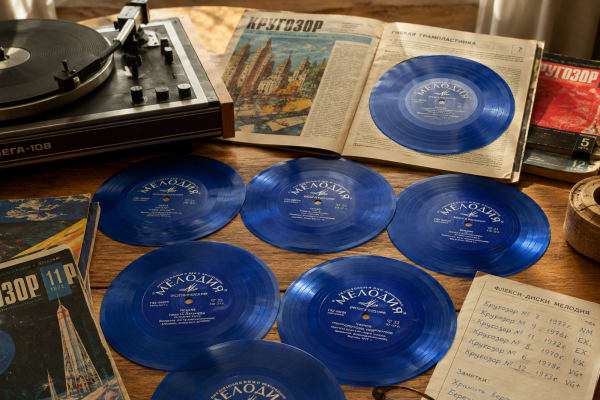
Catalog numbers follow a structured system. A typical Melodiya catalog number looks something like С 60—05773-4 or Д 030667-8. The letter prefix indicates the record type: Д (or D) for flexi-discs (gonyok or milyagki), С for standard stereo LPs, М for mono. The numbers following can help you date a pressing, though this requires cross-referencing — Discogs has become the most reliable free resource for this. What's more useful for quick assessment is the label design itself. Earlier pressings typically feature bolder, more graphic label designs. Later Soviet-era and post-Soviet pressings shifted toward plainer aesthetics.
DID YOU KNOW? Melodiya also issued flexi-discs — thin, floppy plastic records included in magazines, most famously Krugozor and Kolobok. These are incredibly cheap to collect and document an astonishing range of music, from folk recordings to rare jazz.
Sleeve variations are another layer. Early Melodiya releases often came in generic label-printed sleeves with no artist photography — just text and catalog information. Gatefold sleeves were reserved for prestige releases and are more sought-after. Some of the most visually compelling Melodiya sleeves were produced in the 1970s and early 1980s, when Soviet graphic design hit a particular stride. Condition of the sleeve matters, but since many records were sold in generic sleeves to begin with, a bare disc isn't automatically a red flag.
The Most Collectible Categories
Classical music is the backbone of the catalog and the area where Melodiya pressings are most consistently undervalued. The label documented the greatest Soviet and Russian performers of the 20th century: Sviatoslav Richter, Emil Gilels, David Oistrakh, Mstislav Rostropovich. These are world-class recordings available on original pressings for a fraction of what comparable Western releases fetch. Richter's live recordings in particular are extraordinary documents — raw, present, completely unlike his studio work.
Soviet jazz is where things get genuinely exciting for collectors willing to dig. Artists like Vadim Ludwig, the Melodiya Jazz Ensemble, and early work by Alexei Kozlov and his Arsenal group represent a fascinating intersection of Western jazz influence and Soviet constraints. Kozlov's Arsenal records are among the most in-demand Soviet jazz releases right now and still appear at record fairs with some regularity.
DID YOU KNOW? Melodiya released licensed recordings of several Western artists, including Italian pop stars like Adriano Celentano and Mina, which were enormously popular in the USSR. These Melodiya pressings of Italian artists have a dedicated collector following in both Eastern Europe and Italy.
Soviet rock and unofficial music occupy a complicated place in the catalog. Much of the most vital Soviet rock — the Leningrad underground, early Kino, Akvarium — was never officially released on Melodiya during the Soviet period. What the label did release skewed toward officially sanctioned groups like Mashina Vremeni (Time Machine) and Zemlyane, which still have their adherents. The real underground material circulated on magnitizdat — home tape recordings — rather than vinyl, so if you're chasing that music, you're in a different collecting category entirely.
What to Look For When Buying — and What to Avoid
COLLECTOR'S TIP #1: When examining a Melodiya record in person, hold it under a raking light and look for pressing defects — small bubbles, uneven surfaces, and what collectors call "orange peel" texture. Soviet pressing quality was inconsistent, and a bad pressing of a great recording is still a bad pressing.
COLLECTOR'S TIP #2: Don't overlook the matrix. In the dead wax, look for hand-etched markings alongside any stamped catalog information. Handwritten matrix numbers usually indicate an earlier, lower-number pressing — generally preferable to later stamped-only versions.
COLLECTOR'S TIP #3: On Discogs, search Melodiya releases by catalog number rather than title. Cyrillic title searches are unreliable, but catalog numbers are consistently logged and will get you accurate pressing information quickly.
Common Myths About Soviet Vinyl
"Soviet records always sound bad." False. Pressing quality is variable, but excellent-sounding Melodiya pressings exist across all genres. The classical recordings in particular can be stunning.
"All Melodiya records are rare." Also false. Melodiya pressed enormous quantities of many titles. Common doesn't mean uninteresting, but don't let anyone charge rare-record prices for standard releases.
"If it's in Cyrillic, it must be hard to research." Discogs, the Russian music database site Lastfm, and dedicated Soviet music forums have made this far more manageable than it was even ten years ago.
Melodiya Records Every Collector Should Know
- Sviatoslav Richter — Live recordings (various Melodiya releases): Benchmark Soviet classical pressings.
- Alexei Kozlov and Arsenal — Soviet jazz-rock at its most vital.
- Melodiya compilations of Italian artists (Celentano, Mina): Cheap, historically fascinating, great music.
- David Oistrakh playing Beethoven and Brahms violin sonatas: First-rate performances on first-rate pressings.
- Mashina Vremeni — The closest Soviet rock got to an official LP release during the peak era.
Building a Collection That Means Something
The best Melodiya collections aren't the most expensive ones. They're the ones built around a question — what did music sound like inside the Soviet Union? What got through? What got bent into an unexpected shape? A well-chosen shelf of Melodiya records answers those questions in a way no history book quite can. Start with what you can find cheaply, learn to read the matrix, and follow your curiosity. The crate-digging is half the point.
There's also something quietly satisfying about rescuing these records from the discount bins they keep ending up in. Most Melodiya records are not rare. Most of them are not expensive. But enough of them contain genuinely great music — documented on original pressings, at prices that make the rest of the collecting world look absurd — that ignoring this catalog is a real missed opportunity. That disc you pulled from the flea market crate? It might not be worth much money. It might be worth a great deal of listening.