Поёт Ивица Шерфези
FAIXAS
3.25 / 5
LADO A
LADO B
Nota do Coleccionador
A Croatian pop singer sharing a stage with Domenico Modugno — the man who gave the world "Volare" — tells you something about the world Ivica Šerfezi moved through; this 1978 Melodiya LP is what happened when that world reached Soviet Latvia.
SOBRE ESTE DISCO
THE ALBUM
There's a particular warmth to Yugoslav pop of the late 1960s and early 1970s that sits somewhere between Italian melodic song, Viennese operetta, and something harder to name — a kind of Central European balladry that took the emotional directness of chanson and smoothed it into something radio-ready without losing its sincerity, that's what Поёт Ивица Шерфези is. A studio LP of polished vocal pop built around lyrical ballads and lighter uptempo numbers, arranged with strings, rhythm section, and that characteristic Yugoslav studio sound of the era — clean, warm, never overproduced. The record's significance lies partly in its craft and partly in its moment: Yugoslav popular music of this period occupied a genuinely unique position in the socialist world, developing a commercial pop infrastructure that was more open to Western influence than anything being made in the Soviet bloc proper, and Šerfezi was one of its most refined voices.
ARTIST & RECORDING CONTEXT
Ivica Šerfezi was a Croatian singer who built his reputation through television appearances and the festival circuit — particularly the jugovizija and Split Song Festival culture that shaped Yugoslav pop from the 1960s onward. His style was emphatically melodic: a clean, trained tenor voice suited to romantic ballads, delivered with a theatrical restraint that separated him from the rougher edges of Yugoslav rock. This record draws on material from his established repertoire, with tracks like "Annushka and Verochka" — the title rendered in Russian on the Soviet-market sleeve — illustrating exactly why he translated so well eastward: his repertoire leaned toward European song forms that crossed cultural lines smoothly. The arrangements are professional and uncluttered, built to support the voice rather than compete with it.
THIS PRESSING
This is a Soviet Melodiya edition, pressed at the Riga Gramophone Plant (Рижский завод грампластинок) in Latvia — one of Melodiya's regional pressing facilities — and released in 1978 under catalogue number С60-05843-44. The matrix stampers С60-05843/4-1 and С60-05844/4-1 place this firmly in the standard Melodiya С60 licensing series, through which the label issued foreign popular music for Soviet domestic consumption. The label itself identifies the artist as "Ивица Шерфези (Югославия)" — the parenthetical nationality notation being the standard Melodiya shorthand for licensed foreign material. Yugoslavia's unusual geopolitical position within socialism — non-aligned, with freer cultural exchange than Warsaw Pact states — made its pop artists among the most accessible foreign acts for Soviet licensing: no ideological friction, no hard-currency complications, and a shared socialist framing that made approval straightforward. A Riga pressing of a Yugoslav singer is a neat encapsulation of that arrangement, with Latvia's plant — known for quality pressings — handling the physical manufacture.
COLLECTOR SIGNIFICANCE
The documented pressing run of 26,000 copies (confirmed via the RZG Melodiya plant code from 1979) is modest by Melodiya's mass-market standards, placing this well below the hundred-thousand-plus runs issued for Soviet domestic stars. Šerfezi had genuine fans in the USSR — his television exposure through Soviet cultural exchange broadcasts gave him a real audience — but this was niche licensing rather than a mass push, and 26,000 copies spread across the entire Soviet distribution network made the record relatively scarce even at the time of issue. Today, the combination of the Riga pressing provenance (Baltic Melodiya pressings consistently attract collector interest for their quality), the С60 licensing series context, and the inherent curiosity of a Yugoslav pop record officially issued for Soviet audiences gives this a specific appeal that goes beyond Šerfezi fandom alone. It sits at an intersection that East of the Groove readers will recognise immediately: Yugoslavia meeting the USSR on a slab of vinyl, with a Baltic plant as the intermediary.
Track highlights:
- Аннушка и Верочка — The standout on Soviet airwaves; its title was Russian-friendly enough to feel domestic, and the melody is the most immediately memorable thing on the record.
Reparaste nalgum erro ou em algo que precise de correcção? Contacta-me — adorava saber.
PODERÁ TAMBÉM INTERESSAR-TE

Riccardo Fogli
Collezione
Vinyl, LP, Compilation · USSR · 1984
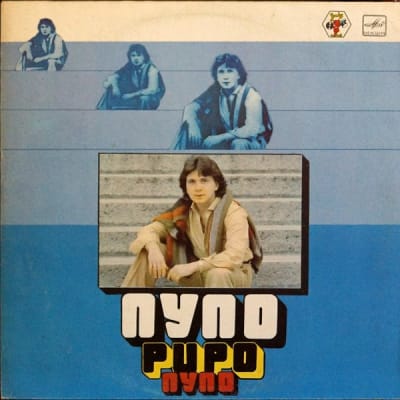
Pupo
Pupo (Пупо)
Vinyl, LP, Album · USSR · 1985

Ricchi E Poveri
Ricchi e Poveri
Vinyl, LP, Album, Reissue · USSR · 1986
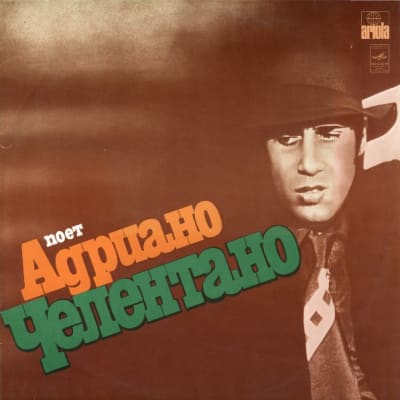
Adriano Celentano
Поет Адриано Челентано (Sings Adriano Celentano)
Vinyl, LP, Album, Repress · USSR · 1987

Mireille Mathieu
Любовь и Жизнь (Love and Life)
Vinyl, LP, Album, Repress · USSR · 1979

Joe Dassin
Люксембургский Сад (Le Jardin du Luxembourg)
Vinyl, LP, Album · USSR · 1979

Amanda Lear
Поет Аманда Лир (Sings Amanda Lear)
Vinyl, LP, Reissue · USSR · 1981

Various
Italo-Hits (Лучшие Итальянские Песни 1982 Года)
Vinyl, LP, Compilation · USSR · 1982