Soli
TRACKLIST
4.39 / 5
SIDE A
SIDE B
ABOUT THIS RECORD
THE ALBUM FIRST
By the late 1970s, Adriano Celentano was one of the most commercially dominant figures in Italian popular music, having spent two decades navigating rock and roll, comedy, social commentary, and mainstream pop with consistent commercial success. His profile internationally spiked sharply following the global crossover of Soli (1979) and the absurdist novelty hit Prisencolinensinainciusol (originally released 1972, but continuing to circulate widely through the mid-to-late seventies). In the Soviet Union, Western popular music reached audiences almost exclusively through official Melodiya licences, and Celentano was among the handful of Western artists deemed culturally and politically acceptable enough to receive that treatment. His Italian identity — neither American nor British — made him a softer ideological proposition, and his records sold in substantial quantities through the state distribution network.
ARTISTIC CONTEXT
Celentano worked closely throughout this period with producer and frequent collaborator Miki Del Prete, and much of his late-seventies output bore the fingerprints of the polished, rhythm-forward Italian pop production style of the era — tight arrangements, prominent bass, and Celentano's distinctive elastic vocal delivery, which owed a clear debt to his early rock and roll influences while remaining entirely his own. His approach to phrasing — often deliberately off-beat, conversational, almost spoken in places — gave even straightforward pop material an idiosyncratic texture that distinguished him from contemporaries. His songwriting during this period frequently touched on everyday domestic life, generational conflict, and ecological concern, themes with broad enough appeal to survive translation across very different cultural contexts.
THIS PRESSING
This edition was manufactured and released by Мелодия (Melodiya), the Soviet state record label, in 1979. Melodiya operated as the sole legal conduit for recorded music within the USSR, and licensed Western releases were produced in centralised pressing plants — most commonly in Riga, Tashkent, or Aprelevka — and distributed through state retail channels. Catalogue numbering and matrix information on Soviet Melodiya pressings typically identify both the issuing firm and the manufacturing plant, making them traceable to specific production facilities. The sleeve design on Melodiya-licensed Western releases was frequently simplified or reformatted relative to original European editions, printed domestically with Soviet-standard materials.
COLLECTOR SIGNIFICANCE
Soviet Melodiya pressings of Western artists occupy a specific and well-established niche in European collecting. They are sought after partly for their scarcity outside the former Eastern Bloc, partly for the visual distinctiveness of their Soviet-era packaging, and partly because they document the curated, officially sanctioned version of Western pop culture that reached Soviet audiences. Celentano in particular retains a devoted following across Russia and the wider post-Soviet region — his records from this period were genuine cultural touchstones for the generation that encountered them through Melodiya — and that sustained regional attachment drives consistent collector interest. Original 1979 Melodiya pressings in any condition circulate infrequently in Western European markets.
Spotted an error or something that needs correcting? Get in touch — I'd love to know.
YOU MIGHT ALSO LIKE
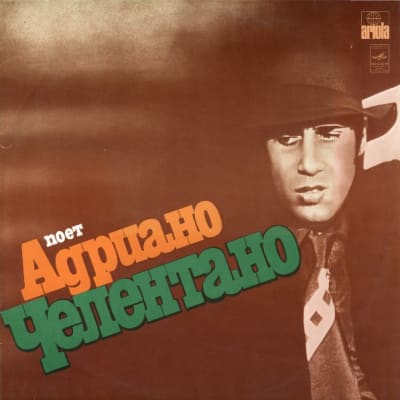
Adriano Celentano
Поет Адриано Челентано (Sings Adriano Celentano)
Vinyl, LP, Album, Repress · USSR · 1987

Riccardo Fogli
Collezione
Vinyl, LP, Compilation · USSR · 1984
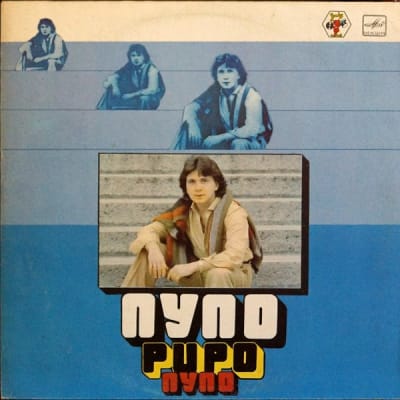
Pupo
Pupo (Пупо)
Vinyl, LP, Album · USSR · 1985

Ricchi E Poveri
Ricchi e Poveri
Vinyl, LP, Album, Reissue · USSR · 1986

Joe Dassin
Люксембургский Сад (Le Jardin du Luxembourg)
Vinyl, LP, Album · USSR · 1979
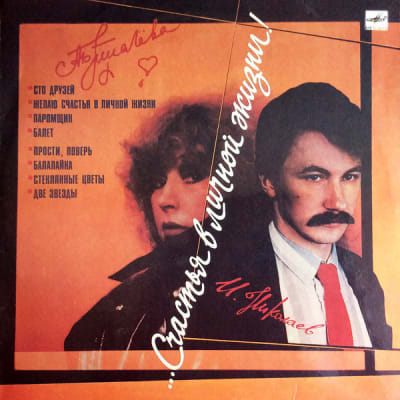
Alla Pugacheva
...Счастья в личной жизни! (...And Happiness In Private Life)
Vinyl, LP, Album · USSR · 1986