Flowers In The Dirt
TRACKLIST
4.12 / 5
SIDE A
SIDE B
ABOUT THIS RECORD
THE ALBUM
Flowers in the Dirt is a studio album released in 1989, arriving at a moment when its maker had spent much of the decade distanced from serious critical engagement. The record pulls in multiple directions — melodic pop craft sitting alongside rawer, more urgent material — and the result is one of the more energized and varied long-players of McCartney's post-Beatles solo career. The production balances clean late-1980s studio sheen with moments of genuine grit, particularly on the harder-edged tracks that open the album. My Brave Face sets the tone early: a bright, hook-driven number that reasserted a commercial instinct that earlier 1980s records had sometimes buried under overproduction. Figure of Eight and This One are similarly direct, built on strong melodic cores without excessive ornamentation. Elsewhere, the album shifts into more introspective territory — Put It There, a gentle acoustic piece, and Motor of Love, a sweeping ballad, show the range across the record's fourteen tracks. The album performed strongly commercially on both sides of the Atlantic, but its more lasting significance lies in being the point at which the songwriting felt genuinely reinvigorated rather than coasting on reputation.
ARTIST & RECORDING CONTEXT
Paul McCartney, former Beatle and one of the most commercially successful songwriters of the twentieth century, made Flowers in the Dirt in close collaboration with Elvis Costello, who co-wrote several tracks during sessions the two conducted together. The Costello collaborations — My Brave Face, You Want Her Too, Don't Be Careless Love, and That Day Is Done — gave the record a sharper, more acerbic edge than McCartney's solo work typically carried. Costello appears on You Want Her Too as a vocal foil, the two trading verses in a mode that plays on tension rather than harmony. The album was produced by McCartney alongside Mitchell Froom, Dave Mattacks, Chris Hughes, and others across multiple sessions, with a large ensemble of contributors including Hamish Stuart, Robbie McIntosh, and Chris Whitten, who would go on to form the core of McCartney's touring band for the subsequent world tour. We Got Married and How Many People are fuller band performances that show the live-readiness of much of the material — these tracks were clearly conceived with a touring context in mind. The recording process was documented extensively, and outtakes from the Costello sessions later surfaced across various reissue projects.
THIS PRESSING
This is a Soviet pressing on Мелодия (Melodiya), the USSR's state record label, which issued Flowers in the Dirt for the Soviet domestic market. The release came during a period of significant thaw in Soviet cultural policy under Gorbachev's glasnost, when Western popular music — including rock and pop that would have been restricted or unavailable years earlier — was being licensed and pressed domestically with increasing openness. McCartney had a particular significance in the Soviet context given the long-suppressed but widely known affection for Beatles records, making a new McCartney album a culturally charged release in a way that most Western pop was not. Melodiya pressings of Western albums were typically issued in simplified packaging relative to their Western counterparts — gatefold configurations and elaborate inserts were often reduced or eliminated, and the vinyl itself was pressed on Soviet-grade stock, which was harder and more brittle than Western pressings of the same period. The label text would have appeared in Cyrillic, and licensing credit to MPL Communications or the original label would generally appear in abbreviated form. This pressing brought the album to a Soviet audience for whom legal domestic access to new McCartney material was itself a notable event.
COLLECTOR SIGNIFICANCE
Within the Soviet Union, a legitimate domestic pressing of a new Paul McCartney album in 1989 carried weight that went beyond the music itself — Beatles recordings had circulated for decades on bootleg and unofficial formats, and Melodiya's willingness to press Flowers in the Dirt was a concrete marker of how much the cultural landscape had shifted by the late Soviet period. Demand would have been high relative to the pressing quantities Melodiya typically produced for licensed Western releases, which were generally modest by Western commercial standards and distributed unevenly across the country. For collectors today, this pressing is sought for exactly that historical specificity: a Soviet-era Melodiya pressing of a major 1989 Western pop release, issued at the tail end of the USSR's existence, with Cyrillic labeling and Soviet-grade vinyl. Melodiya pressings of high-profile Western albums from this glasnost-era window are consistently underrepresented in Western collections, and this one carries the additional pull of the McCartney-in-the-USSR narrative that culminated in his 2003 Red Square concert. The pressing is a documentary artifact of a particular cultural and political moment as much as it is a record.
Spotted an error or something that needs correcting? Get in touch — I'd love to know.
YOU MIGHT ALSO LIKE

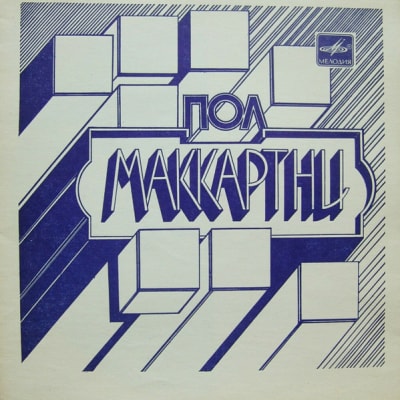
Paul McCartney
Снова В СССР (Back In The USSR)
Vinyl, LP, Album · USSR · 1988
Paul McCartney
Я Люблю Тебя (I Love You)
Flexi-disc, 7", 33 ⅓ RPM · USSR · 1983

Riccardo Fogli
Collezione
Vinyl, LP, Compilation · USSR · 1984
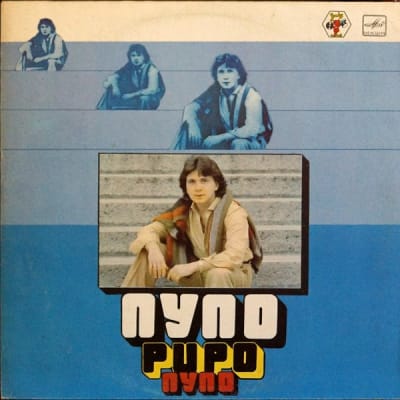
Pupo
Pupo (Пупо)
Vinyl, LP, Album · USSR · 1985

Ricchi E Poveri
Ricchi e Poveri
Vinyl, LP, Album, Reissue · USSR · 1986
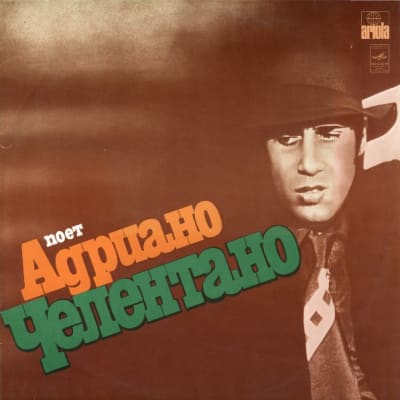
Adriano Celentano
Поет Адриано Челентано (Sings Adriano Celentano)
Vinyl, LP, Album, Repress · USSR · 1987

Mireille Mathieu
Любовь и Жизнь (Love and Life)
Vinyl, LP, Album, Repress · USSR · 1979
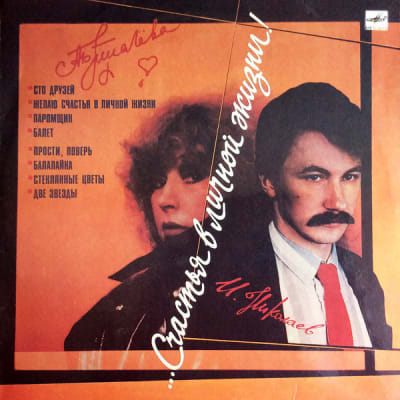
Alla Pugacheva
...Счастья в личной жизни! (...And Happiness In Private Life)
Vinyl, LP, Album · USSR · 1986

Karel Vagner · Lubomír Brabec
Transformations
Vinyl, LP, Album · Czechoslovakia · 1988