All or Nothing
TRACKLIST
3.76 / 5
SIDE A
SIDE B
ABOUT THIS RECORD
THE ALBUM
All or Nothing is the Soviet-market edition of Milli Vanilli's international debut album, released on Мелодия in 1990. The record is a high-gloss West German Eurodance and pop production, built on drum machines, sequenced synthesizers, and layered vocal hooks aimed squarely at the late-1980s dancefloor. The original international release — issued in various configurations between 1988 and 1989 under both the title All or Nothing and Girl You Know It's True depending on territory — became one of the best-selling pop albums of 1989, propelled by a run of hit singles that dominated charts across Europe and North America. "Girl You Know It's True" reached the top five in the United States and United Kingdom, and the album's commercial peak came when it won the Grammy Award for Best New Artist in February 1990 — an award that was subsequently rescinded later that same year when it was publicly revealed that neither of the act's two credited performers had sung on the recordings. That revelation turned the album into one of the most documented controversies in pop music history, transforming a commercially dominant record into a widely known case study in the gap between studio product and public image.
ARTIST & RECORDING CONTEXT
Milli Vanilli was the creation of German producer Frank Farian, who assembled the project in Munich in the late 1980s. Farian wrote and produced the album's material with a team of collaborators including Ralf Rene Machiels and Brad Howell, and the actual vocal performances on the record were delivered by a group of studio singers — among them Brad Howell and John Davis — who were not publicly credited at the time of release. Fab Morvan and Rob Pilatus, the two performers marketed as Milli Vanilli, provided the visual identity of the act but did not appear on the recordings. The production throughout is characteristic of Farian's method: densely layered synth arrangements, programmed percussion, and polished vocal processing. "Girl You Know It's True" and "Baby Don't Forget My Number" are the album's most commercially recognizable tracks, both built on insistent rhythmic loops and call-and-response vocal structures. "Ma Baker," a cover of the 1977 Boney M. hit — itself a Farian production — connects the album explicitly to his earlier work. "I'm Gonna Miss You" and "Dreams To Remember" represent the slower, ballad-oriented side of the record.
COLLECTOR SIGNIFICANCE
This Мелодия pressing is sought after primarily because Soviet-licensed editions of Western pop albums from this period were produced in relatively modest quantities and distributed through a centralized state retail network, making survivorship in collectable condition uncommon. The catalogue number prefix А60 places it within Мелодия's standard domestic vinyl series. The timing of the release — appearing in 1990, the same year the Grammy controversy broke — gives the pressing an additional layer of documentary interest as a snapshot of the album's global commercial reach at its precise moment of collapse. For collectors focused on Eastern Bloc editions of Western chart material, this is an unusual example of a genuinely notorious record reaching Soviet pressing.
TRACKLIST HIGHLIGHTS
"Girl You Know It's True" — The album's signature track, built on a syncopated synth-bass loop, and the single most associated with the subsequent lip-sync scandal.
"Ma Baker" — A Boney M. cover that returns the song to its original producer, Frank Farian, closing the circle on his earlier Munich pop productions.
"Baby Don't Forget My Number" — The follow-up international hit single, using a similar rhythmic template to "Girl You Know It's True" with a more insistent hook structure.
"All or Nothing" — The title track occupies the closing position on the A-side, a mid-tempo production that sits between the uptempo club material and the album's ballads.
Spotted an error or something that needs correcting? Get in touch — I'd love to know.
YOU MIGHT ALSO LIKE

Riccardo Fogli
Collezione
Vinyl, LP, Compilation · USSR · 1984
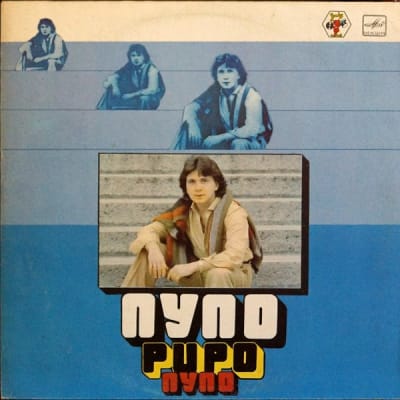
Pupo
Pupo (Пупо)
Vinyl, LP, Album · USSR · 1985

Ricchi E Poveri
Ricchi e Poveri
Vinyl, LP, Album, Reissue · USSR · 1986
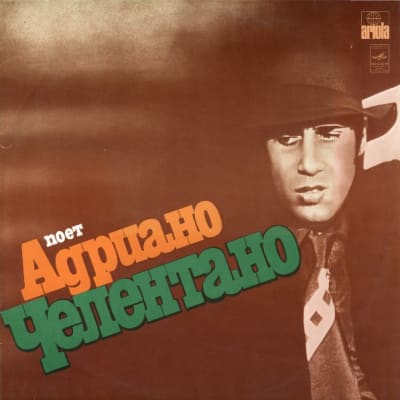
Adriano Celentano
Поет Адриано Челентано (Sings Adriano Celentano)
Vinyl, LP, Album, Repress · USSR · 1987

Mireille Mathieu
Любовь и Жизнь (Love and Life)
Vinyl, LP, Album, Repress · USSR · 1979
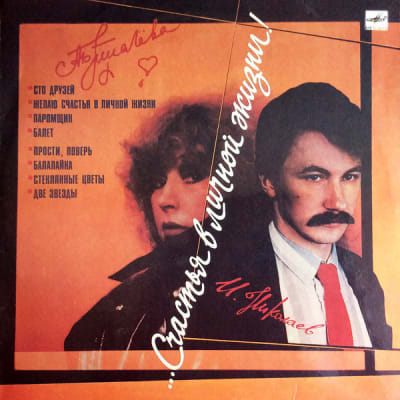
Alla Pugacheva
...Счастья в личной жизни! (...And Happiness In Private Life)
Vinyl, LP, Album · USSR · 1986

Karel Vagner · Lubomír Brabec
Transformations
Vinyl, LP, Album · Czechoslovakia · 1988