Как Тревожен Этот Путь (How Disturbing Is This Way)
TRACKLIST
4.11 / 5
SIDE A
SIDE B
SIDE C
SIDE D
ABOUT THIS RECORD
THE ALBUM
Before Pugacheva became a phenomenon — before the sold-out stadium tours, the Soviet tabloid coverage, the cultural saturation — there was the record. Как Тревожен Этот Путь (How Disturbing Is This Way) arrived on Melodiya at a moment when Soviet popular music was negotiating its own contradictions: officially sanctioned entertainment on one hand, genuine emotional expressiveness on the other. Pugacheva threaded that needle with unusual precision, and this album documents her doing it. Melodiya, the USSR's state-owned monopoly label and the sole legal conduit for recorded music in the Soviet Union, pressed and distributed the record through its centralized system — meaning exposure was vast but editorial control was absolute. That this material was approved at all says something about how carefully Pugacheva positioned herself within the permissible.
ARTISTIC CONTEXT
The musical world Pugacheva inhabited was estrada — a word that requires unpacking for anyone outside the Soviet and Eastern European context. Estrada (from the French estrade, meaning a raised platform or stage) was the umbrella term for Soviet light entertainment music: a broad, state-legitimized genre encompassing pop, orchestrated ballads, comic songs, and theatrical vocal performance. It was the music of concert halls and television variety programmes, not underground clubs. Crucially, estrada was not a pejorative — it was a professional category, and its best practitioners, Pugacheva chief among them, used its conventions as a vehicle for real artistic ambition. Where many estrada performers delivered material cleanly and decorously, Pugacheva brought an actorly intensity to phrasing, stretching syllables, dropping to near-speech, then surging into full-voice delivery with the instincts of someone trained in theatrical stagecraft as much as music.
The recordings here draw on the lush orchestral arrangements characteristic of Soviet studio production of the period — strings, brass fills, prominent piano — but Pugacheva's vocal performance is the gravitational center throughout. Her collaborators on Soviet recordings of this era typically included staff arrangers and session musicians working within Melodiya's own studio infrastructure, a system that produced a recognizable sonic signature: precise, carefully layered, and somewhat formal in texture, with Pugacheva's voice positioned front and center in the mix.
THIS PRESSING
This is a Soviet domestic pressing on Melodiya, manufactured and distributed within the USSR through the label's regional pressing plant network. Melodiya operated pressing facilities across multiple Soviet republics, and plant-specific matrix information in the dead wax can identify the precise facility of origin for any given copy. The catalogue number situates the release within Melodiya's standard numbering system for domestic vocal pop releases. As the only legal source of recorded music in the Soviet Union, Melodiya pressings were produced in large numbers but also consumed heavily — personal copies were played repeatedly, lent, and rarely stored with collector care in mind, which affects survival rates for clean examples.
COLLECTOR SIGNIFICANCE
Pugacheva is the most collected Soviet-era pop artist in the Russian-language market, and demand for her Melodiya releases extends well beyond Russia into émigré communities across Europe, Israel, and North America. Как Тревожен Этот Путь is sought as a document of her earlier recorded work, before her profile became so dominant that the state promotional apparatus reshaped how her records were packaged and marketed. For collectors outside the former Soviet space, Melodiya releases of this period also function as primary-source artefacts of Soviet visual and graphic design — the label's sleeve aesthetics were distinctive and entirely unlike anything produced in the West at the same time. There is no licensed Western pressing of this material to serve as a substitute.
TRACK HIGHLIGHTS
- Как Тревожен Этот Путь — The title track showcases Pugacheva's command of dynamic range, moving between restrained verses and an openly emotive chorus with deliberate theatrical control.
- Арлекино — The song that catalysed Pugacheva's national breakthrough after her 1975 Sopot festival performance; its circus-inflected melody and self-aware theatricality made it unlike anything else in estrada at the time.
Spotted an error or something that needs correcting? Get in touch — I'd love to know.
YOU MIGHT ALSO LIKE
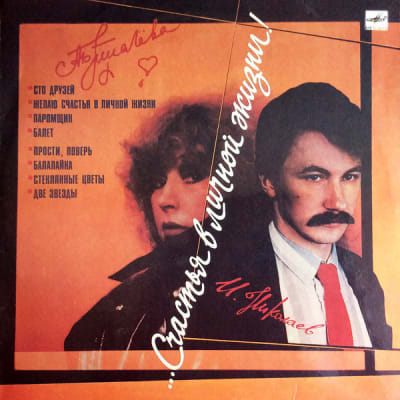
Alla Pugacheva
...Счастья в личной жизни! (...And Happiness In Private Life)
Vinyl, LP, Album · USSR · 1986

Alla Pugacheva
Зеркало Души (Zerkalo Dushi)
Vinyl, LP, Album, Repress · USSR · 1978
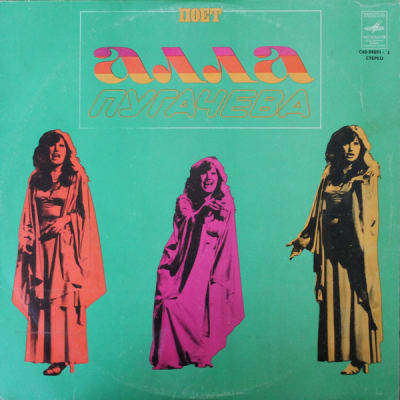
Alla Pugacheva
Поет Алла Пугачева (Sings Alla Pugacheva)
Vinyl, LP, Album, Reissue · USSR · 1980

Riccardo Fogli
Collezione
Vinyl, LP, Compilation · USSR · 1984
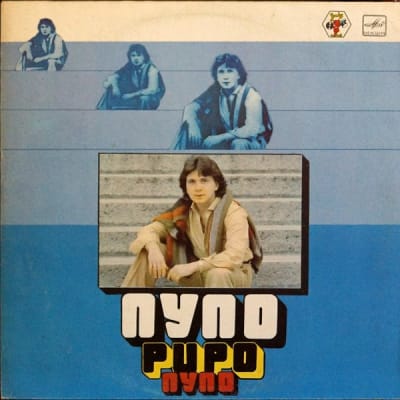
Pupo
Pupo (Пупо)
Vinyl, LP, Album · USSR · 1985

Ricchi E Poveri
Ricchi e Poveri
Vinyl, LP, Album, Reissue · USSR · 1986
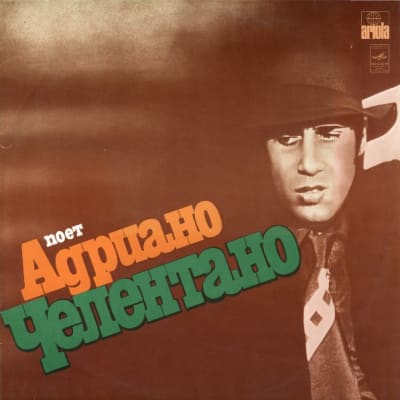
Adriano Celentano
Поет Адриано Челентано (Sings Adriano Celentano)
Vinyl, LP, Album, Repress · USSR · 1987

Mireille Mathieu
Любовь и Жизнь (Love and Life)
Vinyl, LP, Album, Repress · USSR · 1979