Нация Мечтателей (Daydream Nation)
TRACKLIST
4.32 / 5
SIDE A
SIDE B
Collector's Note
Few records illustrate the chaos of the Soviet Union's final year quite like this one. Produced by AnTrop without a license and stripped to a single LP, it transformed a landmark alternative album into a uniquely Russian historical artefact.
ABOUT THIS RECORD
THE ALBUM
Daydream Nation arrived in 1988 as a double LP — a sprawling, overdriven meditation on noise, melody, and urban dread that collapsed the boundary between American underground rock and something approaching art-rock ambition. Guitars are tuned to unconventional intervals and pushed into sustained feedback; songs bleed between tension and release without resolving neatly. The record moves between the pummelling and the spectral, with passages of locked groove noise giving way to hooks that feel almost commercially inevitable before twisting away. It was the moment American indie rock demonstrated it could sustain a full double-album statement without losing density or focus.
ARTIST & RECORDING CONTEXT
Sonic Youth formed in New York in 1981 and by the late 1980s had developed a methodology built on alternate tunings, prepared guitars, and a dual-guitar attack shared between Thurston Moore and Lee Ranaldo. Kim Gordon held a distinct sonic role as both bassist and vocalist. Daydream Nation was recorded in 1988 with producer Nick Sansora and engineer Ron Saint Germain at Greene St. Recording in New York. The opening track — here translated as Бунт Подростков (Teen Age Riot) — builds for nearly seven minutes from a ringing guitar figure into one of the era's most recognisable climaxes. Путешествие Эрика (Eric's Trip) is a brief, claustrophobic piece driven by Ranaldo's vocals and dense distortion. Свеча (Candle) demonstrates the band's ability to sustain melodic structure inside noise architecture. The record's sprawl across four original sides was partly a commercial statement — Sonic Youth released it on Enigma Records, their first album for a label with genuine distribution reach.
This AnTrop pressing reduces the double LP to a single album across two sides, cutting the tracklist from sixteen tracks to eight.
THIS PRESSING
AnTrop was a Leningrad-based Soviet and then Russian label that issued a significant body of Western rock on vinyl from the late 1980s onward. This pressing was issued in Russia in 1991 — the same year the Soviet Union dissolved — and carries the catalogue number П91 00037, a format consistent with AnTrop's domestic numbering system. It is classified as an unofficial release, meaning it was produced without a formal licensing agreement with Enigma Records or Sonic Youth's management. AnTrop pressed a number of Western alternative and indie titles in this period under similar circumstances, pressing vinyl for a domestic market that had no other access to these recordings.
The tracklist has been substantially condensed. The original Daydream Nation spans sixteen tracks across two LPs; this pressing carries eight tracks — four per side — with Russian-translated track titles throughout. The title itself is rendered as Нация Мечтателей. Whether the artwork replicates Gerhard Richter's candle painting used on the original sleeve or substitutes alternative design is not confirmed, but AnTrop pressings of this period frequently departed from original artwork.
COLLECTOR SIGNIFICANCE
In 1991 Russia, Daydream Nation had no official commercial presence. Sonic Youth's music circulated primarily through taped copies among a narrow network of listeners connected to the urban underground scene, making this AnTrop pressing one of the only ways the record existed as a physical object in the country. Its truncated eight-track configuration means Russian listeners encountered a substantially different version of the album — missing entire sequences including the suite that closes the original Side D.
For collectors today, this pressing is notable on several specific counts. The unofficial status, single-LP format, and Russian-translated titles make it a genuinely distinct object from any Western edition. AnTrop pressings of late-period Soviet and early post-Soviet vintage were produced in limited quantities with quality control that varied considerably, and copies in good playing condition are scarce. The 1991 date places it precisely at the collapse of the USSR, giving it historical specificity that pressings from even two or three years later do not carry. Collectors focused on Western alternative rock as it entered Soviet and Russian circulation seek this out as a concrete artifact of that moment of cultural transmission.
- Бунт Подростков (Teen Age Riot) — The album's centrepiece opener translated intact in spirit; at nearly seven minutes it anchors Side A and gives the pressing its greatest claim to representing the source record.
- Серебряная Ракета (Silver Rocket) — A tightly compressed noise-rock piece that sits in sharp contrast to the opener's length.
- Провидение (Providence) — A brief spoken-word and feedback piece from the original, unusual enough that its inclusion over other omitted tracks is a notable editorial choice.
- Король Дождя (Rain King) — Closes Side B in place of the original album's concluding suite, giving this pressing a structurally different ending entirely.
Spotted an error or something that needs correcting? Get in touch — I'd love to know.
YOU MIGHT ALSO LIKE
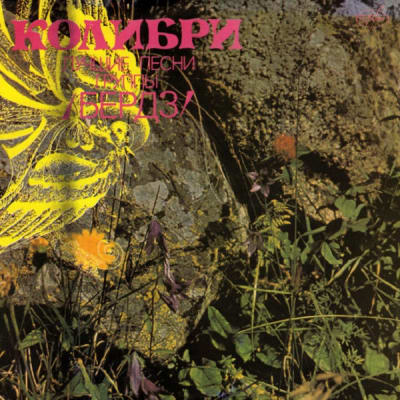
The Byrds
Колибри: Лучшие Песни Группы Бердз
Vinyl, LP, Compilation, Reissue, Unofficial Release · USSR · 1991

Ricchi E Poveri
Ricchi e Poveri
Vinyl, LP, Album, Reissue · USSR · 1986
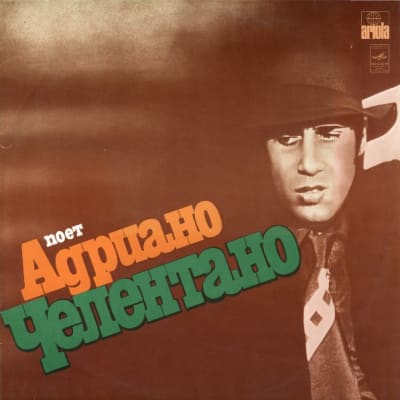
Adriano Celentano
Поет Адриано Челентано (Sings Adriano Celentano)
Vinyl, LP, Album, Repress · USSR · 1987

Adriano Celentano
Soli
Vinyl, LP, Album · USSR · 1988
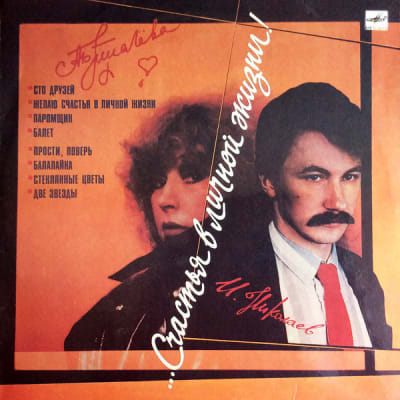
Alla Pugacheva
...Счастья в личной жизни! (...And Happiness In Private Life)
Vinyl, LP, Album · USSR · 1986