
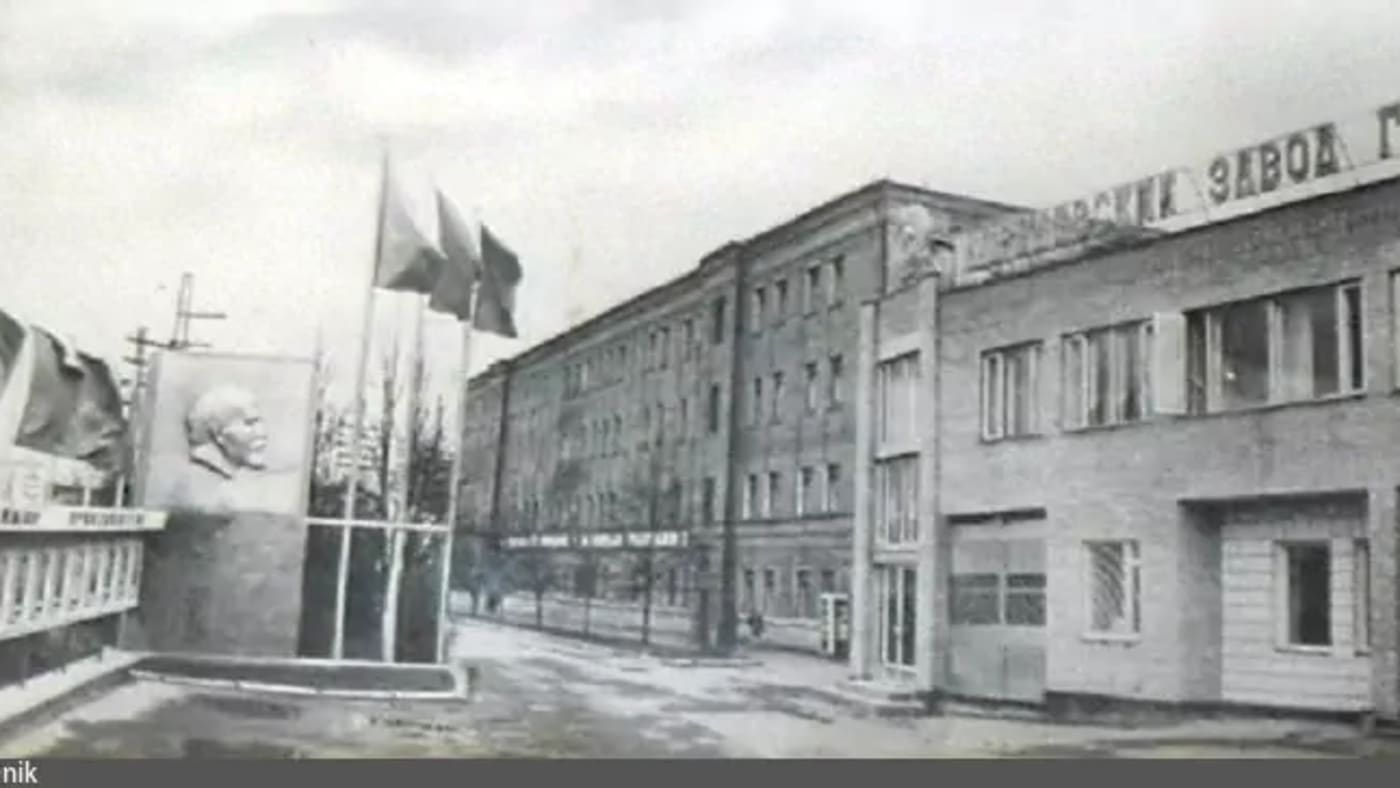
Flip a Soviet LP over and run your finger along the label. Somewhere in the fine print — sometimes stamped into the dead wax, sometimes printed directly on the label in Cyrillic — you'll find it: Апрелевка. Aprelevka. A small town name that means almost nothing to the uninitiated and everything to anyone who collects Soviet vinyl seriously. Once you start seeing it, you can't stop. It's on the classical box sets, on the children's records, on the jazz albums, on the compilations of foreign pop pressed for Soviet listeners who would never hear those artists any other way. Aprelevka is everywhere. And once you understand why, you'll never look at a Soviet record quite the same way again.
What Is Aprelevka — and Why Does Every Collector Eventually Find It?
Aprelevka is a small town roughly 50 kilometers southwest of Moscow, sitting along the Kievskaya railway line in the Moscow Oblast. It is not famous for architecture or culture or sport. It is famous, to the degree it is famous at all, for one thing: records. The Aprelevka Record Plant — known in Soviet administrative language as the Аprelevka Branch of Melodiya — was, for decades, the single largest record-pressing facility in the Soviet Union and one of the largest in the world.
For collectors, the significance isn't geographical. It's statistical. If you own Soviet records, you almost certainly own Aprelevka pressings. The factory's output was staggering in scale, covering virtually every genre that Melodiya — the USSR's state-owned monopoly record label — ever released. Classical symphonies, folk ensembles, children's fairy tales, ballads, jazz, and licensed editions of foreign artists: Aprelevka pressed them all. If Melodiya was the Soviet Union's only record label, Aprelevka was its beating heart.
Quick Facts
- Location: Aprelevka, Moscow Oblast, approximately 50 km southwest of Moscow
- Operated under: Melodiya (Всесоюзная фирма грампластинок «Мелодия»), the USSR's state record label
- Output: Estimates suggest hundreds of millions of records over several decades of operation
- Formats pressed: 78 rpm shellac, 7-inch singles (flexi and vinyl), 10-inch LPs, and standard 33 rpm 12-inch LPs
The Monopoly That Made Aprelevka Inevitable
To understand Aprelevka, you have to understand the Soviet recording industry's unusual structure. In most countries, dozens of competing labels operate dozens of pressing plants. In the USSR, there was one label, Melodiya, formally established in 1964, held a complete state monopoly on the production and distribution of recorded music across all fifteen Soviet republics. It controlled what was recorded, what was pressed, how many copies were made, and how they were distributed. There was no alternative.
Within Melodiya's network, several regional pressing plants existed — in Leningrad, Riga, Tashkent, and elsewhere — but Aprelevka was the flagship. Its proximity to Moscow, the Soviet cultural and administrative capital, made it the default facility for flagship releases, large print runs, and anything requiring central oversight. When a new recording came out of Melodiya's Moscow studios, the path to Aprelevka was the obvious one. That proximity had consequences that collectors still notice today.
The monopoly also meant that Aprelevka bore an unusual cultural burden. In a market economy, unprofitable genres get dropped. In the Soviet system, everything had to be available — classical music for educated urban audiences, folk recordings for rural listeners, children's educational content for schools, and popular light entertainment for everyone in between. Aprelevka pressed all of it, regardless of commercial logic, because commercial logic was not the organizing principle. The result is a catalog of almost absurd breadth.
A Factory That Pressed a Nation's Soundtrack
Think for a moment about what a Soviet household actually listened to across four or five decades of vinyl production. A Чайковский: Лебединое озеро pressed for the State Radio orchestra sitting next to a record of war songs for Victory Day. A children's record of fairy tales that three generations of kids wore out on the family's Akkord turntable. A vinyl edition of ABBA songs licensed through Melodiya in the late 1970s, bought by a teenager in Moscow who had no other legal way to hear Western pop music. A recording of Dean Reed, the American singer who became a genuine celebrity in the Eastern Bloc. The odds that all of these came from Aprelevka are very high.
This is what makes the factory remarkable from a collector's standpoint — not any single release, but the sheer comprehensiveness. Aprelevka pressed records that were genuinely loved and records that were purely functional. It pressed propaganda and it pressed Beethoven. The factory had no artistic agenda of its own; it was a machine for turning master tapes into playable vinyl at the scale that a country of 250 million people required.
Did You Know? During peak Soviet production years, estimates suggest the USSR was pressing over 200 million records annually across all its plants. Aprelevka, as the largest single facility, likely accounted for a significant portion of that total. For context, that exceeds the total annual output of many Western countries' entire recording industries during the same period.
Soviet families often owned relatively few records — both because records were an expense and because availability was subject to chronic shortages and distribution irregularities — but almost every family that owned records owned at least one Aprelevka pressing. The factory's output reached into virtually every corner of Soviet domestic life.
Inside the Labels: How Collectors Identify an Aprelevka Pressing
This is where the article gets practical, because identifying an Aprelevka pressing is a real skill, and one worth developing.
Reading the Label
Melodiya used a series of pressing plant codes on its labels. Aprelevka releases are often identified by the Cyrillic abbreviation АЗГ (Аprеlevsky Zavod Gramplastinok — Aprelevka Record Factory) appearing on the label itself, usually in small print near the catalog number or matrix information. This isn't always consistent — label design changed across decades — but on many pressings from the 1960s through the 1980s, the factory identification is printed clearly if you know where to look.
Reading the Dead Wax
The matrix area — the run-out groove — is where serious collectors spend their time. Aprelevka pressings often carry a specific handwritten or stamped factory code in the dead wax alongside the catalog number and side designation. The exact format changed over different periods, and variations exist even within the same release, which tells its own story about how production was organized across multiple stampers and production runs.
Collector's Tip When examining a Soviet LP's dead wax, look for hand-etched characters alongside the stamped matrix number. Different handwriting styles suggest different lacquer-cutting engineers or different production runs. For popular releases with large print runs, Aprelevka sometimes produced multiple generations of stampers — and the sonic character of earlier stampers (cut closer to the original master) is noticeably better than worn later pressings. Always check the dead wax before assuming two copies of the same album sound the same.
Label Color Variations
Melodiya's label design evolved considerably over the decades. The classic red-and-black Melodiya logo went through several distinct visual iterations, and these variations roughly correspond to different production eras. Collectors use label design as a quick dating tool — though pressing plant doesn't always change with label design, so cross-referencing matrix codes is still essential.
Did Every Copy Sound the Same?
The short answer is no, and this matters enormously to anyone buying Soviet records today.
Aprelevka's massive output came at a cost. Popular releases — albums that sold in the millions — went through multiple generations of stampers as original lacquers and metal parts wore down. A first-generation stamper, cut directly from an original lacquer, will sound notably cleaner and more dynamic than a later stamper produced from a dub or a worn metal part. Soviet pressing quality was also notoriously variable even within a single production run: the vinyl compound used in the USSR differed from Western formulations, and warping, surface noise, and off-center pressings are common complaints.
That said, the picture isn't uniformly grim. Early Aprelevka pressings of major classical releases — particularly those from the 1960s and early 1970s — can sound genuinely excellent. The factory had capable cutting equipment, and the original Melodiya recordings themselves were often technically accomplished. The problem is identifying the good pressings from the mediocre ones, which requires exactly the kind of dead wax detective work described above.
Why It Matters Soviet pressings of licensed Western artists — the ABBA compilations, the various Italian pop releases documented elsewhere in our archive (see: How Italian Pop Conquered the USSR) — exist in huge quantities, but the quality spread is enormous. A collector who picks up the first copy they find may get a worn late pressing that sounds like it was dubbed from a cassette. A collector who checks matrix numbers and pressing condition may find a copy that sounds surprisingly close to the European original. The difference between these two experiences is knowing what to look for.
The Records That Left the Country
Not all Aprelevka pressings stayed within Soviet borders. Melodiya operated a modest but consistent export program, producing records — sometimes in specially designated export editions — for sale through Soviet trade organizations in Western Europe and beyond. These export pressings occasionally feature different label designs, bilingual text, or markings indicating they were destined for foreign markets.
For collectors outside Eastern Europe, the encounter with Aprelevka often happens through exactly these channels: an export copy of a Soviet classical recording bought from a secondhand shop in Vienna or Amsterdam, or a compilation of Soviet folk music sold through a cultural organization in France or Italy. The factory's reach, through Melodiya's export arm, extended further than its geography might suggest.
The exports also created an interesting quality distinction. Records pressed specifically for export were sometimes produced with slightly more attention to quality control — the reasoning being that they would face comparison with Western pressings in foreign markets. Whether this is consistently true is debated among collectors, but export editions with their distinctive labeling are actively sought by collectors for exactly this reason. For more on how Soviet records circulated internationally, the broader context is worth exploring — particularly in relation to foreign artists who found their records sold back into Soviet pressing plants (see: Foreign Artists Who Became Soviet Superstars).
The Human Scale of the Operation
The factory employed thousands of workers across its decades of operation. For most of them, it was simply a job — skilled industrial work, like pressing any other manufactured product. The records that passed through their hands represented the full spectrum of Soviet cultural production, from recordings of the Bolshoi Orchestra to flexi-disc giveaways in children's magazines. The workers who operated the presses, cut the lacquers, and inspected the finished product almost certainly did not think of themselves as cultural custodians. They were factory workers meeting production quotas.
This is worth holding onto when the romanticism around Soviet vinyl gets too thick — and in collector circles, it sometimes does. The records weren't made with artisanal care. They were made at industrial scale under a system that prioritized output numbers. The quality variations, the occasional warps, the inconsistent pressing standards: these aren't mysteries. They're the predictable output of a massive state industrial facility operating under Soviet economic conditions.
And yet those same workers, following the same routines, produced records that have outlasted the state that ordered them. That's not romantic. It's just true.
Why Collectors Still Care
There are practical reasons to care about Aprelevka and reasons that go beyond practicality.
The practical ones first: Soviet pressings — including the enormous Aprelevka catalog — remain among the most affordable entry points into serious record collecting. While Western pressings of major classical recordings can command significant prices, equivalent Soviet editions are often available for a fraction of the cost. For anyone building a collection of Soviet-era music, or for classical collectors curious about Soviet orchestras and conductors, Aprelevka pressings represent genuine musical value at very accessible price points.
The deeper reason is that Aprelevka pressings are primary sources. They are the physical artifacts through which Soviet citizens actually heard music — not the ideal version, not the audiophile pressing, but the actual object that sat on the turntable in a Leningrad apartment or a Kyiv living room. That historicity is part of their interest. Collecting them is a form of access to the listening experience of an entire vanished world.
For Collectors: What to Look For
- Best pressings: Look for early 1960s–early 1970s classical pressings with low matrix numbers indicating early stamper generations
- Avoid: Heavily played copies with significant surface noise — Soviet vinyl is susceptible to permanent damage from worn styli
- Seek out: Export editions with bilingual labels — these are rarer and sometimes better-pressed
- Dead wax check: Always compare matrix codes when choosing between multiple copies of the same title
- Condition baseline: Grade stricter than you would for Western vinyl — Soviet pressings that look VG may play closer to VG-
- Hidden gems: Children's records and folk releases in good condition are consistently undervalued and historically interesting
Understanding Soviet records as a collecting category — how they were made, distributed, and exported — is a bigger subject than any one factory. For a broader orientation, A Collector's Guide to Melodiya Records and Understanding Soviet Record Labels cover the wider context in detail.
Most records don't say where they were made in any way that listeners noticed. People put them on the turntable and heard music. The name printed in small type on the label, or scratched into the dead wax, was invisible to them — manufacturing information, not part of the experience.
Decades later, that invisible text has become something else entirely. When collectors see "Aprelevka" now, they see a factory that pressed the music of an entire civilization — its official culture and its guilty pleasures, its greatest orchestras and its children's songs, its propaganda and its Beethoven. A place that appears on no album cover, credited on no sleeve, acknowledged by no liner note, that nonetheless shaped what music sounded like to hundreds of millions of people across the twentieth century.
The next Soviet record you pick up: check the label. Check the dead wax. Somewhere in that fine print, Aprelevka is probably there. It usually is.


