Nightflight To Venus
FAIXAS
4.00 / 5
LADO A
LADO B
SOBRE ESTE DISCO
THE ALBUM
Nightflight to Venus is the third studio album by Boney M., released in 1978 on Hansa Records. It is a disco and Euro-pop record built on dense, percussion-heavy arrangements, string sections, and call-and-response vocal structures, produced with the high-gloss production style that defined late-1970s European dance music. The album was a commercial phenomenon across Western Europe, reaching number one in several countries including the UK, West Germany, and the Netherlands, and spawning multiple hit singles. Where the group's previous work had already established the template, this album pushed the production into more elaborate territory — layering horns, synthesizers, and choral backing into tracks that were engineered as much for dancefloor impact as for radio play.
ARTIST & RECORDING CONTEXT
Boney M. was a West German-based vocal group assembled and produced by Frank Farian, the Frankfurt producer who wrote and arranged virtually all of the group's material. The core lineup — Marcia Barrett, Maizie Williams, Liz Mitchell, and Bobby Farrell — performed Farian's productions, with Farian himself handling most of the lead vocal recordings in the studio. The group's identity was as much a Farian construction as a conventional band, with the live and visual presentation carefully managed to match the studio product.
The album's two most commercially significant tracks were "Rivers of Babylon" — a reggae-inflected arrangement of a Melodians song drawing on Psalm 137 — and "Brown Girl in the Ring", a Trinidadian folk song reworked into a synth-driven pop track. Together they were released as a double A-side single and became one of the best-selling singles in UK chart history at the time. The remainder of the album draws on a similar playbook: "Rasputin", a narrative disco track recounting the life and death of the Russian mystic Grigori Rasputin, showcases Farian's ability to construct a theatrically structured pop song with a genuine hook built around historical subject matter.
THIS PRESSING
This Melodiya edition is a licensed Soviet pressing of a Western commercial release — an arrangement that was uncommon and carefully controlled. Melodiya, the state-owned monopoly label of the USSR, issued very few Western pop and disco titles, and selections reflected both ideological considerations and the particular bureaucratic processes of Soviet cultural licensing. A Boney M. album reaching Soviet consumers through an official state pressing is a notable cultural artifact of that period, representing one of the more unexpected intersections of Western commercial disco and the Soviet distribution system. Notably, "Rasputin" — a song explicitly about a Russian historical figure portrayed in a salacious and unflattering dramatic light — appearing on an officially sanctioned Soviet pressing adds a layer of historical irony that makes this edition genuinely distinctive beyond its format.
COLLECTOR SIGNIFICANCE
Soviet Melodiya pressings of Western artists are consistently sought after as Cold War-era cultural objects, and Boney M. occupies a specific place in this category: the group had an outsized and well-documented popularity in the USSR and Eastern Bloc countries, making Soviet-market editions of their records particularly meaningful to collectors focused on that intersection of Western pop and Eastern Bloc reception history. The presence of "Rasputin" on an officially issued Soviet pressing makes this album of particular interest. Melodiya pressings were manufactured for domestic distribution rather than export, and surviving copies in good playing condition are not abundant on the Western collector market.
TRACK HIGHLIGHTS
- "Rivers of Babylon" — a reggae-tinged arrangement of the Melodians' 1970 original, driven by a repeating bass figure and massed vocal harmonies; became one of the biggest-selling singles in UK chart history at the time of release.
- "Rasputin" — a narrative disco track structured around the life and death of the Russian mystic, notable for its dramatic spoken and sung sections and the sheer improbability of its appearance on an officially sanctioned Soviet pressing.
- "Brown Girl in the Ring" — drawn from Trinidadian folk tradition and rebuilt around a synthesizer riff, forming the B-side of the double A-side single with "Rivers of Babylon."
- "Nightflight to Venus" — the title track, a mid-tempo synth-and-strings production that leans more toward atmospheric Euro-pop than the d
Reparaste nalgum erro ou em algo que precise de correcção? Contacta-me — adorava saber.
PODERÁ TAMBÉM INTERESSAR-TE

Riccardo Fogli
Collezione
Vinyl, LP, Compilation · USSR · 1984
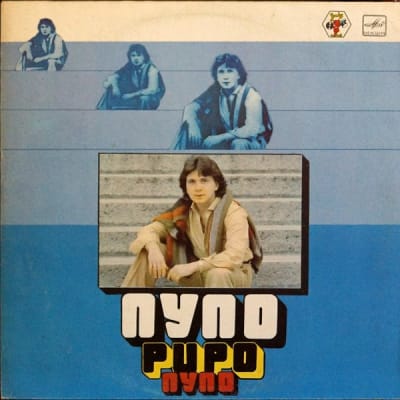
Pupo
Pupo (Пупо)
Vinyl, LP, Album · USSR · 1985

Ricchi E Poveri
Ricchi e Poveri
Vinyl, LP, Album, Reissue · USSR · 1986
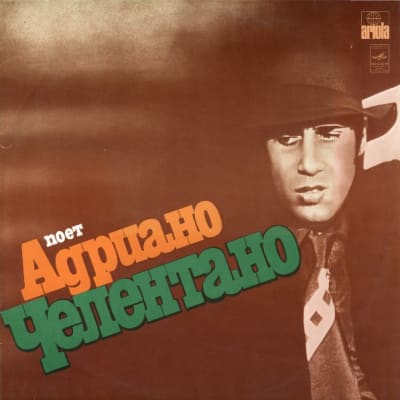
Adriano Celentano
Поет Адриано Челентано (Sings Adriano Celentano)
Vinyl, LP, Album, Repress · USSR · 1987

Mireille Mathieu
Любовь и Жизнь (Love and Life)
Vinyl, LP, Album, Repress · USSR · 1979