Abba
FAIXAS
3.85 / 5
LADO A
LADO B
SOBRE ESTE DISCO
THE ALBUM
Released in 1975, ABBA was the Swedish quartet's third studio album, issued on the Polar Music label in its original Scandinavian configuration and built largely from the commercial momentum generated by their Eurovision victory the previous year. Where its predecessor leaned into glam-tinged pop theatrics, this record settled into something more deliberate: layered vocal harmonies over clean, radio-ready arrangements that drew from soft rock, bubblegum pop, and traces of country, with production polish that was unusually refined by mid-decade European pop standards. I Do, I Do, I Do, I Do, I Do and SOS were the album's commercial engines, the latter in particular landing as one of the strongest pure pop constructions of the era — a minor-key verse resolving into a euphoric chorus that demonstrated real structural sophistication beneath its accessible surface. The album reached the upper regions of charts across Western Europe and Australia, confirming the group's reach well beyond their Scandinavian base.
ARTIST & RECORDING CONTEXT
ABBA — Agnetha Fältskog, Björn Ulvaeus, Benny Andersson, and Anni-Frid Lyngstad — recorded the album at Metronome Studio in Stockholm under the production of Benny Andersson and Björn Ulvaeus, with Michael B. Tretow serving as recording engineer and a central figure in shaping the group's distinctive studio sound. Tretow's use of double-tracking and spatial widening on the vocal arrangements is particularly audible on SOS and Mamma Mia, the latter built around an insistent piano figure and a lyric that balances comic self-awareness with genuine melodic hook. Man in the Middle and I've Been Waiting for You show the group working in a more straightforward rock idiom, while Rock Me pushes toward hard pop territory. Andersson and Ulvaeus wrote or co-wrote all material on the album, with Stig Anderson contributing lyrics on several tracks.
COLLECTOR SIGNIFICANCE
The Polskie Nagrania Muza pressing on SX 1355 is the primary point of interest for collectors working through the Eastern Bloc licensed discography of ABBA. Polish pressings of Western pop material from this period circulated in a market with no access to imports, meaning domestic editions like this one served as the only legitimate format available to Polish listeners at the time. The Muza label's vinyl quality from this era is variable, and well-preserved copies with intact sleeves attract attention accordingly. For collectors focused specifically on licensed Eastern European pop pressings of the 1970s, this catalogue number represents a clean data point in a release history that is not always straightforward to document.
Reparaste nalgum erro ou em algo que precise de correcção? Contacta-me — adorava saber.
PODERÁ TAMBÉM INTERESSAR-TE

Abba · Гунеш (Gunesh)
Огненный Поцелуй (Kisses Of Fire)
Flexi-disc, 7", 33 ⅓ RPM, Mono · USSR · 1980

Abba
Voulez Vouz
12" · USSR · 1981

Mireille Mathieu
Любовь и Жизнь (Love and Life)
Vinyl, LP, Album, Repress · USSR · 1979

Joe Dassin
Люксембургский Сад (Le Jardin du Luxembourg)
Vinyl, LP, Album · USSR · 1979

Alla Pugacheva
Зеркало Души (Zerkalo Dushi)
Vinyl, LP, Album, Repress · USSR · 1978
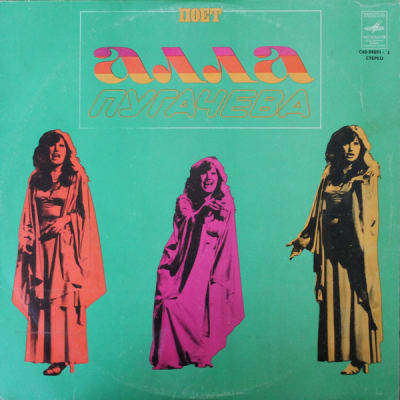
Alla Pugacheva
Поет Алла Пугачева (Sings Alla Pugacheva)
Vinyl, LP, Album, Reissue · USSR · 1980